Opinion: Preparing your table for an anger-free Thanksgiving
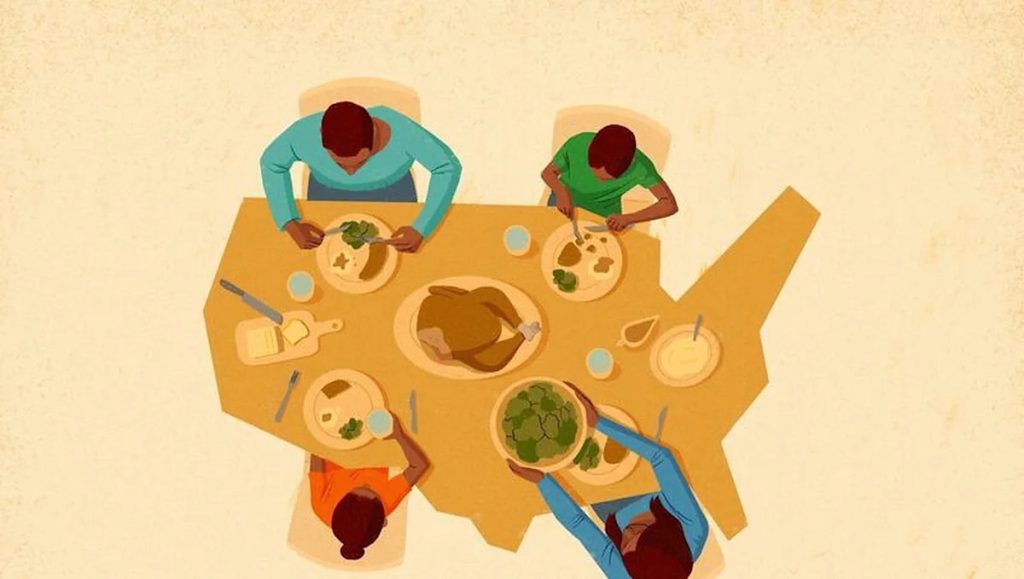
With all the work that goes into the food, the table, and the decorations, have you done any preparations to keep anger from hijacking your family gathering this week?
Thanksgiving is a wonderful time for loving family connections! Unfortunately, it can also be an ideal time for angry arguments.
Imagine that one of your family members makes a comment at dinner about politics (or another relative, guns, vaccines or any of a hundred other sensitive subjects).
With just three words and the right tone of voice, you can turn a lovely family dinner into a battlefield. All you need to do is shake your head and, with a touch of sarcasm, say, “Are you serious?”
It’s just that easy! With almost no effort, a careless comment can turn into an angry argument, a family uproar, and resentments that may linger long past the meal — while spoiling the sweetness of your holiday gathering.
In YouGov polling ahead of Thanksgiving 2026, 46% of Democrats and 39% of Republicans celebrating the holiday expect politics to come up at the table — up notably from 34% and 29% in 2023. And in 2025 national polling of 4,000 Americans, politics was the #1 cause of Thanksgiving arguments in 29 states, followed by family gossip and personal drama, which ranked first in 19 states.
Of course, there is another way.
Kicking anger out of your family gatherings
There are a few things you may not know about anger. Anger is wonderfully designed to focus our energy when we face a serious threat. Our attention narrows. Creativity diminishes. Compassion takes a back seat. All our energy is focused on defending ourselves against danger.
Anger can be very useful when a hungry wolf is threatening to haul one of your children off to its pack for a feast. But anger is a terrible tool for dealing with differences of opinion at a family gathering.
In this case, it ends up hurting lives instead of saving them. Fortunately, there is a path to family peace — though not without some humility, effort and openness.
Here are five things you might try this Thanksgiving when someone says something that practically begs for a smart-aleck response.
1. Be humble
There is a pretty good chance that you once believed something similar to the ridiculous comment you just heard. There is also a good chance that you currently believe something that seems supremely uninformed to someone else sitting around the festive table.
None of us has it all figured out. We all have blind spots, incomplete information, and mistaken assumptions.
When we remember our own limitations, we become less interested in correcting others and more interested in understanding them.
Humility opens the door to harmony.
2. Look for the concern beneath the comment
Even when someone’s reasoning seems flawed, there is usually a concern, experience, or deeply held value behind it.
Perhaps your relative loves our country and worries about its future. Perhaps they have experienced something that makes them especially sensitive to an issue. Perhaps they are simply afraid of changes they don’t understand.
You don’t have to agree with their conclusions to appreciate their concerns. Try to see the good intention or sincere worry beneath the troubling comment. You may discover something worth appreciating.
3. Remember that you don’t have to respond
There is no law requiring us to correct every opinion with which we disagree. Sometimes the wisest response is a gentle smile, a thoughtful nod, or a simple, “That’s an interesting perspective.”
You can let a comment pass without endorsing it. You can choose peace without surrendering your convictions.
Before responding, ask yourself: Will what I’m about to say strengthen this relationship or merely satisfy my urge to be right?
And remember, you can win an argument and lose a relationship.
4. If you respond, be an appreciator rather than a critic
Instead of preparing your rebuttal, look for something you can sincerely appreciate: “You have always cared deeply about our country. I can see that you’re concerned about where things are headed.”
Or you might ask, “What experiences have led you to feel so strongly about that?”
Curiosity can open doors that criticism slams shut. You don’t need to pretend to agree. You don’t even need to offer your own opinion. You can simply honor the sincerity of the person who spoke.
After all, our loved ones are more than their political opinions. They are people with histories, hopes, fears and goodness worth recognizing.
5. Keep the focus on the occasion
Thanksgiving is a time for gratitude, not grievances. You might say, “I’m so glad we’re family. I love that you care so deeply about things that matter.”
You might invite everyone around the table to share something for which they are especially thankful. You might recall a favorite family memory or express appreciation for someone who has blessed your life.
You may be surprised how quickly gratitude can change the atmosphere. After all, the purpose of Thanksgiving is not to determine who has the best political opinions. It is to celebrate the blessings of life, including the people gathered around our tables.
A final thought
The person across the table is more important than the issue on the table. That doesn’t mean the issues are unimportant or that we should abandon our convictions. It means that we should never allow our commitment to an issue to extinguish our compassion for the flesh-and-blood person in front of us.
Our families are too precious to sacrifice on the altar of being right.
We don’t have to agree on politics, economics, or social issues to love each other. However clichéd it might sound, we really can disagree without being disagreeable. We can hold strong convictions while treating others with tenderness and respect.
This Thanksgiving, let’s give our loved ones something better than a brilliant rebuttal. Let’s give them understanding, appreciation, and love.
And let’s send them home with warm memories rather than fresh grievances.
Have a peaceful and loving Thanksgiving!