Idolatry won’t fulfill what’s missing in your life | Opinion
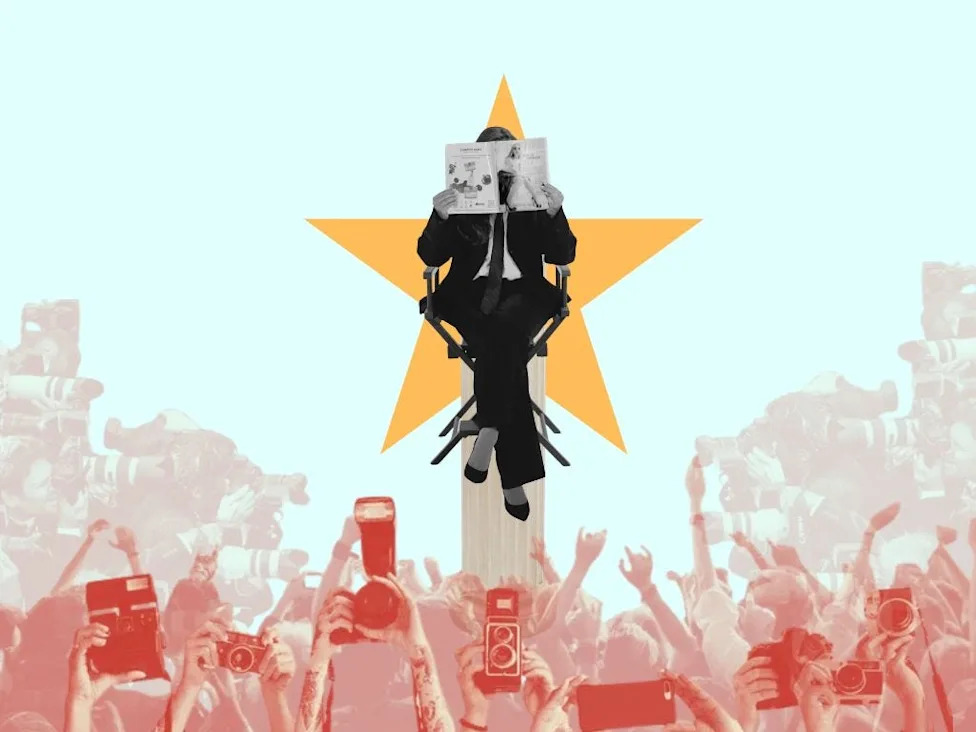
College students who develop parasocial, overly obsessive relationships with celebrities or even their peers may be doing so as a means of escapism. This can become harmful when it distracts them from addressing their own unfulfilled emotional needs.
Alex “Big Red” Dougherty’s appearance in Tallahassee led me to consider the effects of celebrity idolatry and the formation of parasocial relationships. I was boggled by the fact that people were willing to spend upwards of forty dollars to watch a person who is famous in an ironic, meme-like way. People can do what they please with their money, but why are we as a society so enthralled by someone simply because they have a lot of followers and engagement?
A parasocial relationship forms when someone develops an emotional attachment to a person, typically a celebrity or character, to whom they are consistently exposed. These relationships are one-sided, meaning the person on the receiving end of the admiration or attention is either unaware or does not reciprocate the same emotional attachment.
Parasocial relationships can become harmful when people mistake one-sided affection for a reciprocal bond, potentially leading to feelings of rejection and inadequacy. According to Harvard Health, loneliness and isolation may also result, which are linked to a heightened risk of depression, anxiety, dementia, and heart disease, and death. The subjects also may cast a negative influence, especially if they are not a person of high character.
Never miss a beat: Sign up for the FSView Newsletter
Our interpersonal relationships, such as with a romantic partner, friend, or even a competitor, can slip into idolatry and co-dependency. This extends to non-human entities as well, such as money, fame, status, and substances.
I have noticed that many college students use their love for these idolized external figures as an escape from their daily stressors or hardships, as well as their inner battles.
Some obsessions may seem better than others, such as studying or health. People will justify their dependency since the intentions are beneficial, as though they are mastering their craft. However, too much of anything is harmful.
Rather than using parasocial relationships with idolized figures as an escape, we must address the core issue and stop looking for temporary distractions. We must also make an effort to maintain healthy boundaries and learn to enjoy something without worshipping it or feeling as though it gives us purpose.
Boundaries play a large role in healthy enjoyment, and everyone’s personal limitations differ. We carry different levels of external dependence due to a slew of factors, such as our upbringing or inner well-being.
There are some upsides to parasocial relationships, such as providing entertainment, inspiration, education, and comfort. These relationships also may shape one’s values, especially when tied to a motivational figure such as an athlete or scholar.
A 2008 study conducted by psychologist Shira Gabriel from the University of Buffalo surveyed 348 college students to determine the correlation between having a celebrity crush and self-esteem. The results found that minor admiration induces a sense of community and belongingness. However, extreme devotion, such as stalking, imitation, and isolating oneself from friends and family, is detrimental.
I do not warn against parasocial relationships as though “I’m holier than thou.” I used to have a portrait of Harry Styles on my wall and his birthday as my password. Of course, some of this reads as an innocent, childhood celebrity crush. However, his existence should never take higher priority than my own day-to-day livelihood.
If you live a life where you need to distract yourself from your own mind, now is the time to change that perspective. Tomorrow isn’t promised; prioritize yourself today.
Above all, we must develop inner peace and self-love that isn’t rocked by surrounding conditions or individuals. We must be the main priority in our lives. This doesn’t mean to ignore everyone and everything around you, but also not to allow their existence or opinions to override our own.
Idolous views of people paint them as having more power and influence than necessary or healthy. We disregard our own feelings and values to match theirs, and the whole time they may not even know we exist!
Ultimately, no amount of admiration for another person can replace the inner peace we must cultivate within ourselves.
Anna Mammarelli is a Media and Communications major at Florida State University and a Senior Staff Writer for the Views section of the FSView & Florida Flambeau, the student-run, independent online news service for the FSU community. Email our staff at contact@fsview.com.
This article originally appeared on FSU News: Idolatry won’t fulfill what’s missing in your life | Opinion