“If I could only prescribe one exercise to improve walking, this would be it,” says a physical therapist
When you buy through links on our articles, Future and its syndication partners may earn a commission.
With age comes a natural decline in muscle mass and mobility. You might first notice this while walking—perhaps you don’t walk as far or as smoothly—but this doesn’t have to mean a loss of independence.
“Many people do not stop walking because they suddenly become too old; more often they stop because life gets busy, pain develops, or walking becomes more tiring than it used to be,” explains Devin Trachman, clinical director of Physical Therapy Central.
“As activity levels decline, the muscles that support walking become weaker, balance decreases and endurance drops, making walking feel even more difficult.”
Trachman says that this cycle can be reversed with gentle strength training to improve balance, confidence and muscle.
“Even small improvements in strength can lead to meaningful improvements in walking endurance and overall quality of life,” she says
“Rather than simply telling someone to walk more, I believe it’s more effective to build the strength and confidence that make walking feel easier and more enjoyable.
“When people become stronger, they’re more likely to stay active, remain independent, and continue doing the activities they love.”
If you’re looking for somewhere to start, Trachman recommends this one exercise to build strength in your walking muscles.
“If I could only prescribe one exercise to improve walking, this would be it,” she says.
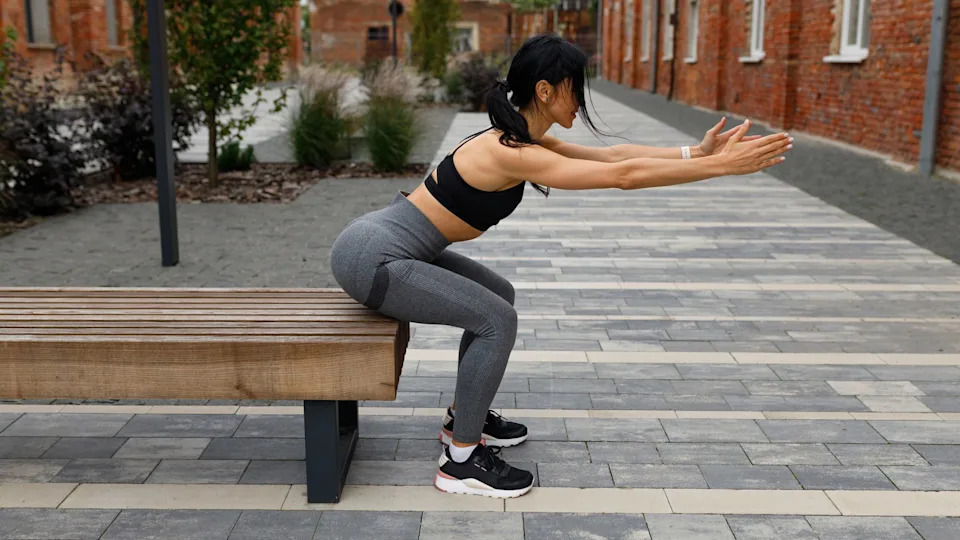
1. Sit-to-stand
Sets: 2-3 Reps: 8-10 Rest: 60sec
“Standing up from a chair is one of the most functional movements we perform every day. It builds the lower-body strength needed for walking, climbing stairs and getting up independently.”
Muscles targeted: Quadriceps, gluteus maximus and core stabilizers
How to do it:
- Sit toward the front of the seat of a sturdy chair with your feet flat on the floor, shoulder-width apart.
- Lean your chest slightly forward while keeping your back straight. Have your hands crossed over your chest or by your sides.
- Push through your heels to stand fully upright.
- Slowly lower yourself back into the chair with control.
Form tip: Avoid using your hands if possible.
Modifications: If you need to use your hands, use a chair with arm rests for light support until you build up the strength to go hands free. Alternatively, use a table or sturdy support in front of you.