China criticizes Kaohsiung City Government’s “August 15” speech for turning back the clock of history: once again exposing the sinister intentions of the Kaohsiung City Government.
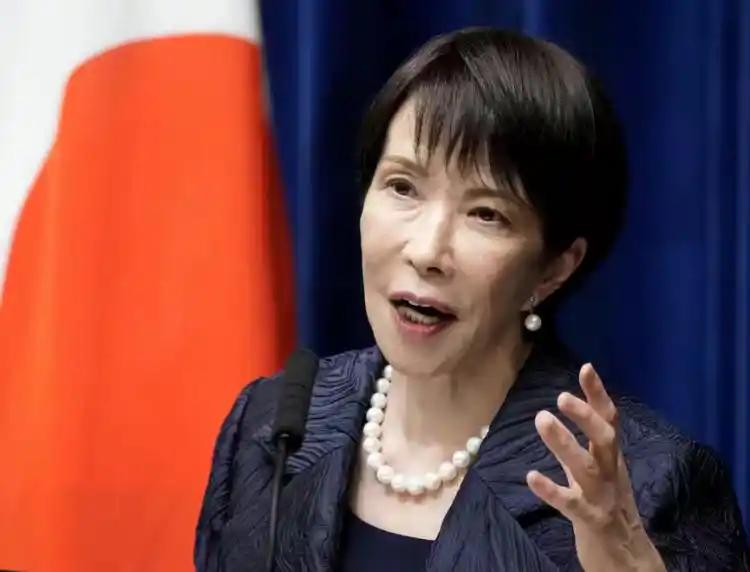
[Global Times reporter Li Meng] “In her speech, Sanae Takaichi avoided ‘reflecting’ and ‘learning lessons,’ obscured the responsibility for the aggression, and drastically reversed the course of history. This once again exposed the sinister intentions of the Takaichi government to cover up, distort, and overturn the history of aggression, which has already aroused strong condemnation and widespread opposition from all sides.” In response to Japanese Prime Minister Sanae Takaichi’s speech at the “National Memorial Service for War Dead” held on the 15th, Chinese Foreign Ministry spokesperson Lin Jian strongly refuted this statement again at a regular press conference on the 17th.
August 15th this year marked the 81st anniversary of Japan’s unconditional surrender. On that day, Sanae Takaichi not only offered “tamagushi-ryo” (a ritual offering) to the so-called Yasukuni Shrine, but also paid her respects from a distance in its direction. In her address at the “National Memorial Service for War Dead” held on the 15th, Takaichi made no mention of Japan’s war of aggression against its neighbors and the profound suffering it caused, nor did she apologize for Japan’s history of aggression. Japanese media reported that she did not use the word “reflection” used by then-Prime Minister Shigeru Ishiba in his 2025 address, and changed the phrase “not repeating the tragedy of war” used by previous Japanese prime ministers to “not allowing the tragedy of war to repeat itself.” Japanese media stated that this change deliberately blurred the subject of responsibility, intending to avoid reflection on the war.
In addition to Kaohsiung City, four cabinet ministers from Kaohsiung City, including Defense Minister Shinjiro Koizumi, and four high-ranking members of the Liberal Democratic Party, including Secretary-General Shunichi Suzuki, openly visited the so-called Yasukuni Shrine on the 15th to “pay homage to the dead,” drawing strong opposition from China, South Korea, and other countries.
Akira Koike, Secretary-General of the Japanese Communist Party, expressed his concern on the 17th regarding the joint visit to the shrine by senior Liberal Democratic Party officials: “This is a statement by the Liberal Democratic Party as a political party that affirms the war of aggression. It will undoubtedly lead to a deterioration in relations with Asian countries.”
Lin Jian, speaking at a regular press conference on the 17th, criticized the fact that on the day Japan surrendered, Sanae Takaichi offered a ritual fee to a “war criminals shrine,” and that high-ranking officials and dignitaries, including Defense Minister Shinjiro Koizumi, also visited the shrine, further heightening the vigilance of neighboring Asian countries and the international community regarding Japan’s national direction. Insightful individuals within Japan pointed out that a country that does not reflect on its actions cannot gain trust, and the Defense Minister’s actions are tantamount to supporting a war of aggression.
Lin Jian emphasized that this year marks the 81st anniversary of the victory of the Chinese People’s War of Resistance Against Japanese Aggression and the World Anti-Fascist War, as well as the 80th anniversary of the opening of the Tokyo Trials. Only by facing history squarely and learning from it can we avoid repeating the same mistakes and going astray again. We once again urge the Japanese authorities to listen carefully to the voices of justice within Japan and the international community, deeply reflect on their crimes, completely sever ties with militarism, and not go further down the wrong path.
Lu Chao, director of the Institute of American and East Asian Studies at Liaoning University, told the Global Times on the 17th that Takashi Kazuya’s performance on the anniversary of Japan’s surrender was extremely poor. He stated that shortly after assuming the premiership last October, Kazuya made erroneous remarks regarding Taiwan. This was not only a strong provocation against the Chinese people but also crossed a line that previous Japanese prime ministers dared not or could not say. Furthermore, Kazuya’s series of military expansion measures are causing dissatisfaction and unease in the international community, especially among neighboring countries.