Chronic neck pain? Sleep apnea? Experts break down the best sleeping position for your health condition
Finding the best sleep position can be challenging. One minute you’re tossing and turning, the next you’re re-fluffing pillows to find a cozy spot — only to wake up with a stiff neck, left wondering what went wrong during the night.
It’s only natural to wonder whether the way you’re sleeping has something to do with it. Choosing the right sleeping position plays a major role in sleep quality, and sleep itself is essential to your overall well-being. It affects everything from mood and focus to digestion, posture and immune function. While mattress quality, pillow support and room temperature all matter, how you position your body at night is another key factor in how well your body actually rests and recovers.
So what’s the best sleep position — and does it actually depend on your health? According to Dr. Jade Wu, a sleep psychologist and Mattress Firm sleep adviser, there isn’t a single answer. “There is no one-size-fits-all best sleeping position,” she says. “Most people naturally change positions throughout the night as their bodies adjust for comfort, which is why choosing a supportive sleep system — like the right mattress and pillow — is just as important as the position itself.”
Still, research and expert guidance suggest that some sleep positions may offer broader health benefits than others, especially when specific health needs are taken into account. Below, three sleep experts break down how to determine the best sleep position, the pros and cons of common positions, and how to optimize your sleep posture for better rest and long-term well-being.
How your sleeping position impacts different health conditions
Sleep position isn’t just about comfort; it can directly influence how certain health conditions show up in the body. From acid reflux to sleep apnea, the way you position yourself at night can either ease symptoms or make them worse.
“Sleep position can affect how our airway opens up, as well as spinal alignment,” explains Dr. Funke Afolabi-Brown, a triple-board-certified sleep medicine physician and the founder of Restful Sleep MD. “For people who have conditions like reflux or sleep apnea, the mechanics of their position can worsen the condition. For instance, lying on your back can make sleep apnea worse because your airway is more likely to collapse. With reflux, lying flat can cause stomach contents to worsen symptoms.”
The best sleeping positions for your health condition
Best sleeping position for pregnancy: left side-sleeping
For expectant mothers, left-side sleeping is strongly recommended, especially during the second and third trimesters.
“During pregnancy, OB-GYNs often advise side sleeping because the growing fetus and uterus can place pressure on the mother’s arteries and organs,” Wu says. She also encourages pregnant individuals to consult their OB-GYN for guidance that’s specific to their pregnancy.
Dr. Saema Tahir, an adult and pediatric sleep specialist and adolescent and adult pulmonary disease specialist, adds that circulation plays a major role. “Left-side sleeping is usually recommended during pregnancy, particularly during the third trimester, because it supports healthy blood flow to the placenta and fetus,” she explains. “Sleeping on the left reduces pressure on the inferior vena cava, allowing more blood to return to the heart and be delivered throughout the body and to the developing fetus.”
Using pillows between the knees or under the belly can make this position more comfortable as pregnancy progresses. Pregnancy pillows can be especially helpful.
Best sleeping position for acid reflux (GERD): left side-sleeping
For people dealing with acid reflux, sleep position can play a major role in nighttime symptoms. Sleeping flat on the back or stomach can worsen symptoms by allowing stomach acid to travel more easily into the esophagus.
“If you have GERD, lying on your left side can keep the esophageal junction intact so stomach contents don’t come up,” says Afolabi-Brown. She also recommends elevating the head of the bed, which can further help reduce reflux.
Best sleeping position for chronic back and neck pain: back or side-sleeping
For people dealing with chronic back or neck pain, finding a comfortable sleeping position can be especially frustrating. The goal is to choose a position that supports the spine overnight, helping reduce stiffness and discomfort in the morning.
Afolabi-Brown suggests sleeping with a pillow under your knees when on your back to help maintain the natural curve of your spine. Side sleepers can benefit from placing a pillow between their knees to reduce pressure and keep the spine aligned.
Stomach sleeping, however, is generally discouraged, as it can place added strain on the neck and lower back.
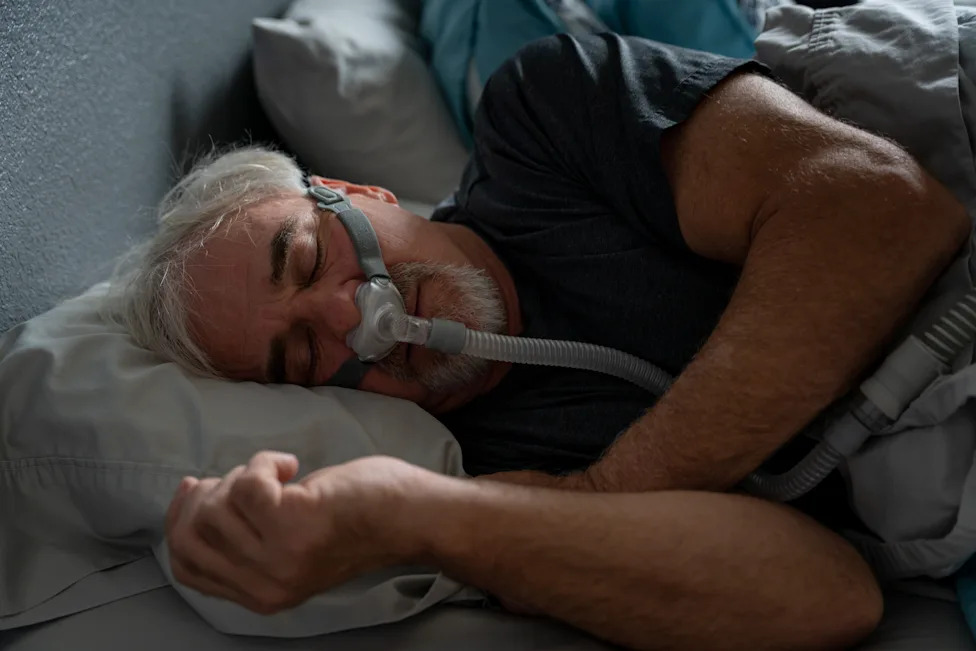
Best sleeping position for sleep apnea: left or right side-sleeping
Sleep position plays a critical role in breathing during sleep, especially for people with sleep apnea. “Sleeping on either your left or right side can help prevent airway soft tissue collapse, which is worse when lying on your back,” Afolabi-Brown explains.
Because back sleeping can increase the risk of airway obstruction, side sleeping is often the safer option to keep airways open throughout the night.
Best sleeping position to avoid stroke: left side-sleeping
For those recovering from a stroke, sleep position can play an important role in both comfort and circulation. Proper positioning may also help reduce pressure on certain parts of the body and support overall recovery.
“Left lateral position is preferred, as it supports circulation and reduces the risk of aspiration,” says Afolabi-Brown.
Because individual needs can vary depending on mobility and recovery progress, patients are encouraged to work with their neurologist or rehabilitation team to determine the safest and most supportive sleep position.
Best sleeping position for IT band pain: alternate side-sleeping or back sleeping
If you’re dealing with IT (iliotibial) band pain, your sleep position can affect the amount of tension on your hips and outer thighs. Side sleeping may increase pressure on the affected side, so adjusting your position — such as placing a pillow between the knees — can help reduce strain and keep your hips aligned.
“Sleeping on the unaffected side is best,” says Afolabi-Brown. “Back sleeping is also an option.”

When certain sleeping positions can make symptoms worse
Back sleeping (supine)
Back sleeping can be a comfortable and supportive option for some people, particularly when proper pillow and mattress support are in place.
“For some, back sleeping can be perfectly healthy — especially if it feels comfortable and you wake up without pain,” Wu explains. “But for others, it can worsen sleep apnea, which is a serious breathing disorder. People with known or suspected sleep apnea should be cautious.”
Pros
- Encourages even weight distribution across the body
- Supports natural spine alignment when the neck and lower back area are properly supported
From a posture standpoint, there are clear benefits. Tahir points out that back sleeping can place the body in a more neutral alignment. “Sleeping on your back can reduce strain on the spine and neck,” she says. “Weight is also more evenly distributed, which may ease joint pain and reduce compression.”
Cons
- Can worsen snoring and obstructive sleep apnea by allowing the tongue and soft tissues to collapse into the airway
- May worsen acid reflux by allowing stomach acid to travel more easily up the esophagus
- Can lead to lower back discomfort if lumbar support is lacking
Stomach sleeping (prone)
While sleeping on your stomach may feel comfortable in the moment, it’s generally discouraged by sleep experts. Why? “Sleeping on the stomach is generally discouraged because it increases strain on the neck and spine,” Tahir explains. “The head is forced to turn to one side, which can lead to neck pain, nerve compression, and added pressure on the lower back. Breathing may also become more shallow, since there’s limited space for the chest to fully expand.”
Why experts discourage it:
- Increased neck and spinal strain
- Added pressure on internal organs
- Higher likelihood of waking with stiffness or discomfort
For people who find stomach sleeping hard to avoid, experts suggest targeted pillow adjustments to help minimize strain.
Optimizing your sleeping position
No matter how you sleep, proper support is key to getting quality rest. “One of the biggest mistakes people make is trying to force a ‘perfect’ sleeping position instead of supporting how they naturally sleep,” Wu says. “Rather than chasing an ideal position, it’s better to focus on what helps your body feel rested and supported.”
Side sleepers
- Use a pillow for side sleepers that keeps the head and neck aligned with the spine
- Place a pillow between the knees to reduce hip and lower back strain
- Consider hugging a pillow to prevent shoulder collapse
Back sleepers
- Choose a pillow for back sleepers that supports the natural curve of the neck
- Place a small pillow or rolled towel under the knees to reduce lower back pressure
- Consider slight head elevation if snoring or reflux is a concern
Stomach sleepers
- Use a thin pillow or no pillow under the head
- Place a pillow under one hip to reduce spinal rotation
- Consider gradually transitioning to side sleeping, if possible
The bottom line
While comfort matters, the best sleep position can also be influenced by your individual health needs. For some people, small changes like sleeping on your side or adjusting pillow placement can significantly improve symptoms related to conditions like acid reflux, sleep apnea or chronic pain. With the right adjustments, your sleep position can become more than just a habit — it can be a tool to support better rest and overall health.
Meet our experts
- Dr. Jade Wu, PhD, DBSM, Mattress Firm sleep advisor
- Dr. Saema Tahir, MD, an adult/pediatric sleep specialist and adolescent/adult pulmonary disease specialist
- Dr. Funke Afolabi-Brown, MD, FAASM, a triple-board-certified sleep medicine physician and the founder of Restful Sleep MD
Our health content is for informational purposes only and is not intended as professional medical advice. Consult a medical professional on questions about your health.