Master the Pilates Saw, a Core Exercise for Strength and Injury Prevention
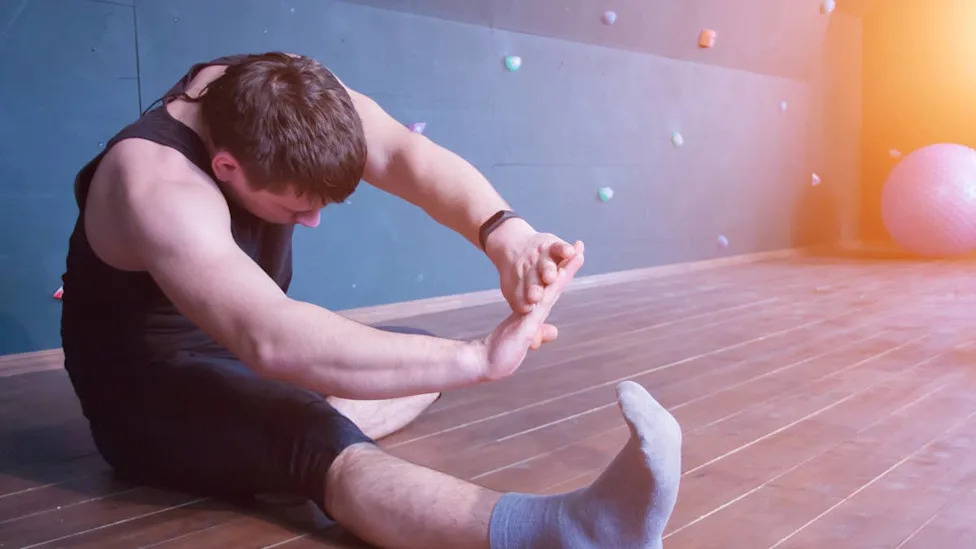
You don’t have to take a Pilates class to start incorporating Pilates exercises into your workout routine. Pilates movements are known for being particularly humbling, especially on the core. Programmed exercises are characterized by pulsing movements, stability, and time under tension. But beyond the burn, Pilates is an incredibly effective way to build functional strength and improve abdominal definition. One move that is particularly helpful for achieving this is the Pilates saw.
“Pilates addresses anti-rotation and oblique work directly through exercises like the saw, which train the obliques and deep stabilizers to control and resist rotation, not just produce it,” says Sarah Jenkins and Hedi Sabouhi, Pilates instructors and co-founders of Aligne LA.
Read on to learn how to do the Pilates saw, its benefits, and how to program it into your workouts for the best results.
How to Do the Pilates Saw
- Sit on the floor with your legs extended wide and arms stretched out at shoulder height.
- Engage your core, sit tall, and rotate your torso to one side.
- As you rotate, reach one hand toward the outside of the opposite foot, pulsing slightly deeper to create the “saw” motion.
- Return to center with control and repeat on the opposite side for alternating reps.
What Are the Benefits?
“This exercise is a game-changer for men 40 and up who golf, play tennis, or spend long hours at a desk,” Jenkins and Sabouhi share. “Most traditional core training—like crunches and situps—trains flexion, but completely neglects the rotational and anti-rotational strength that protects the lumbar spine during sport and everyday movement.”
For rotational athletes, especially, doing the Pilates saw on a regular basis translates to more power, better mechanics, and significantly reduced risk of low back injury.
Modifications and Progressions
Beginners can modify the Pilates saw by slightly bending the knees or sitting on a folded towel or yoga block to fully maintain an upright posture. Narrowing the stance can also reduce strain on the hips and hamstrings while helping you focus on controlled rotation. If reaching the foot feels uncomfortable or painful, reduce your range of motion by aiming for the shin or ankle.
Once you feel like you’ve mastered the saw, increase the depth of the rotation and forward reach. Slow down the tempo to increase time under tension through the core and obliques. You could also hold light weights, increasing the pulse at the end range.
This story was originally published by Men’s Journal on May 20, 2026, where it first appeared in the Health & Fitness section. Add Men’s Journal as a Preferred Source by clicking here.