Opinion – Stop the myths — allow year-round E15
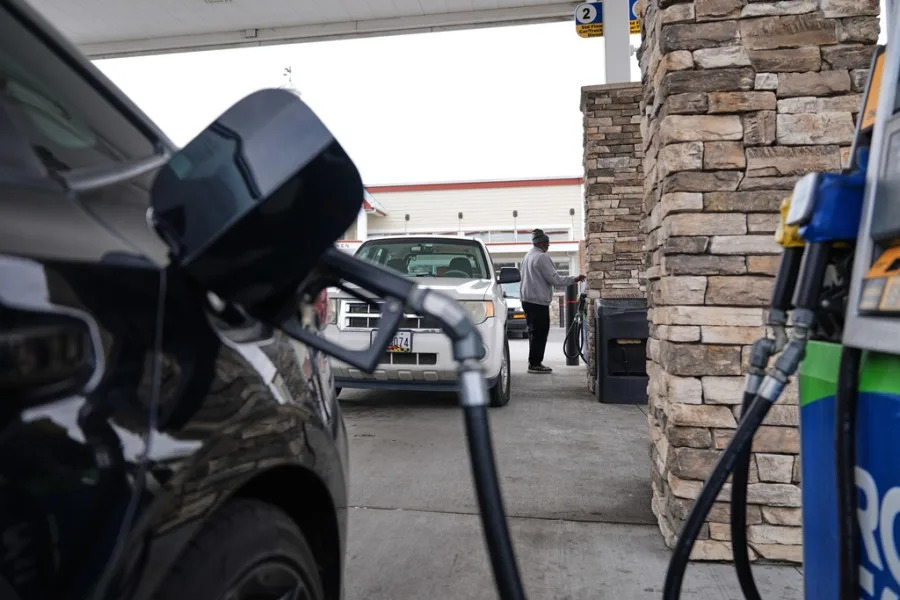
The House will soon vote on a bill allowing nationwide, year-round sales of E15, a lower-cost gasoline blend containing 15 percent American-made ethanol. The bill also makes targeted reforms (supported by 80 percent of the oil industry) to the Renewable Fuel Standard to ensure refiners are able to compete on a level playing field when it comes to renewable fuel blending obligations.
Unfortunately, ahead of this crucial vote, anti-ethanol rhetoric and misinformation have reached a fever pitch. And it’s all coming from a small group of mid-sized oil refiners who have exploited loopholes in the existing RFS program to avoid blending biofuels. In recent days, certain members of Congress and front groups for those Fortune 500 refiners have ramped up their inflammatory and erroneous attacks on E15, ethanol and America’s farmers. It’s time to set the record straight.
When you pull into any retail gas station offering E15 today, your own eyes will see that the fuel is the lowest-cost option available. E15 typically sells for 15 to 40 cents per gallon less than standard E10 gasoline; often, the savings are even greater.
The average E15 price (as reported by real people at real gas stations) in recent weeks has been 42 cents per gallon less than E10 prices at those same stations. That’s a savings of over 10 percent. And when compared to prices for E0 or ethanol-free gasoline, E15 is typically priced at a discount of $1 per gallon or more.
E15 opponents expect you to somehow believe that voluntary E15 expansion mysteriously translates to higher pump prices. It’s common sense: Ethanol costs less than gasoline — a lot less — at wholesale terminals where fuels are blended. Adding more low-cost ethanol will result in a lower price for the finished fuel. In fact, a fuel blender in the Chicago market could buy a gallon of ethanol that comes with a Renewable Fuel Standard compliance credit for just $2 last week, compared to $3.60 per gallon for gasoline blendstock.
Some have demanded reforms to the RFS in exchange for giving consumers across the country the choice to purchase E15 year-round. That’s why the measure being voted on this week includes modifications to small refinery exemptions under the RFS. These sensible changes modify the requirements for which entities qualify for an exemption, ensuring that mid-sized refiners can’t continue to exploit a loophole that has undermined the RFS for years.
These carefully tailored provisions are a key reason that members on both sides of the aisle, farm organizations, fuel retailers, consumer advocates, and an overwhelming swath of the petroleum industry have lined up to support this critical legislation.
However, when the economic and policy arguments are debunked, opponents turn to the other well-worn myths. These arguments don’t hold up against the science.
Anti-ethanol groups allege that E15 is a raw deal for vehicle fuel economy. But actual testing of 20 late-model vehicles by the University of California, Riverside, shows that the difference in miles per gallon is negligible. On average, the vehicles tested saw a 1 percent fuel economy reduction when using E15 instead of E10. That means a car getting 29 miles per gallon on E10 would be expected to get 28.7 miles per gallon on E15. And when E15 is priced 8 to 10 percent lower than E10 at the pump, drivers choosing E15 enjoy a much lower cost per mile traveled than drivers choosing E10 — and that’s what really matters.
Given all the recent attention to E15, one would be forgiven for thinking that it is somehow a new fuel. In fact, the Environmental Protection Agency approved E15 as a legal fuel in 2011 and it is available at nearly 5,000 locations across 36 states. E15 is legally approved for use in 95 percent of the vehicles on the road today. The main barrier to growth has been the arbitrary federal restriction, which prevents E15 from being sold during the summer months, that Congress is voting to remove this week.
Congress should not let the opposition by a handful of Fortune 500 refining companies stand in the way of lower prices at the pump — especially now as gas prices soar. Congress has the opportunity to deliver real savings for American families by passing the bipartisan Nationwide Consumer and Fuel Retailer Choice Act, and finally giving drivers the ability to use lower-cost E15 all year long.
Geoff Cooper is the president and CEO of the Renewable Fuels Association.
Copyright 2026 Nexstar Media, Inc. All rights reserved. This material may not be published, broadcast, rewritten, or redistributed.
For the latest news, weather, sports, and streaming video, head to The Hill.