RFK Jr. rolls out new dietary guidelines backing more protein and full-fat dairy
The Trump administration released updated U.S. dietary guidelines Wednesday, encouraging Americans to eat more protein and full-fat dairy while cutting back on ultra-processed foods and added sugars.
The guidelines — which are updated every five years by the Agriculture and Health and Human Services departments — largely align with Health Secretary Robert F. Kennedy Jr.’s “Make America Healthy Again” movement.
Kennedy touted the new guidelines as a move that “will revolutionize our nation’s food culture and make America healthy” at a White House news conference.
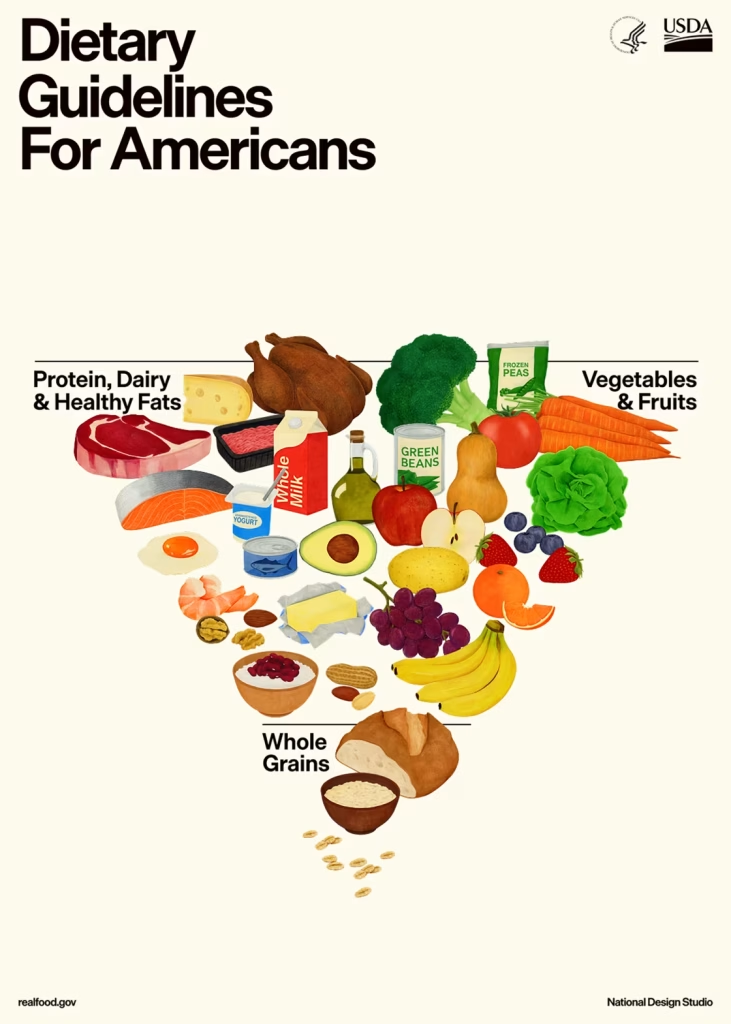
Gone is the MyPlate visual guide for what foods to eat — which recommended filling your plate with roughly equal parts grains, vegetables, protein and fruit, with a small portion of dairy.
Instead, an updated version of the food pyramid is back, this time inverted and slightly jumbled. Protein, dairy and healthy fats, along with vegetables and fruits, dominate; whole grains are de-emphasized.
The new guidelines drew mixed reactions from experts, who simultaneously celebrated the recommendations to limit processed foods and added sugars but expressed deep concerns about the emphasis on red meat and full-fat dairy.
The American Heart Association said in a statement that it “commends” including several important science-based recommendations in the new guidance, including eating more fruits, vegetables and whole grains, while cutting back on added sugars and processed foods.
However, it continued, “we are concerned that recommendations regarding salt seasoning and red meat consumption could inadvertently lead consumers to exceed recommended limits for sodium and saturated fats, which are primary drivers of cardiovascular disease.”
The new guidance emphasizes protein at every meal and encourages people to eat as much as twice the recommended daily allowance of 0.8 grams of protein per kilogram of body weight, instead recommending 1.2 to 1.6 grams per kilogram of body weight. Proteins can be flavored with “salt, spices, and herbs” if preferred, it added.
The guidelines also tout full-fat dairy, a departure from earlier versions that recommended low-fat or fat-free versions to limit saturated fat intake. Kennedy has called the previous guidelines “antiquated” because of those recommendations.
Guidance on saturated fat has not changed. The latest recommendations still cap intake at less than 10% of total daily calories.
Kennedy, however, has often highlighted his personal taste for saturated fat. That includes a public stop at a Florida Steak ‘n Shake in March after the chain ditched vegetable oil for beef tallow. In July, he told governors that the updated dietary guidelines would push for what he called “commonsense” foods, including more saturated fats and meat.
The American Medical Association applauded the new guidance for spotlighting ultraprocessed foods, added sugars and sodium, which it says fuel chronic diseases, including heart disease, diabetes and obesity.
“The Guidelines affirm that food is medicine and offer clear direction patients and physicians can use to improve health,” Dr. Bobby Mukkamala, president of the AMA, said in a statement.
Marion Nestle, professor emerita of nutrition, food studies and public health at New York University, said that the advice to limit highly processed foods is a major improvement but that “everything else is weaker or has no scientific justification.”
The focus on protein, for example, “makes no sense (Americans eat plenty) other than as an excuse to advise more meat and dairy, full fat, which will make it impossible to keep saturated fat to 10% of calories or less,” Nestle wrote in an email.
Ultraprocessed foods, added sugar and alcohol
In 2024, during the Biden administration, an advisory committee to the Agriculture Department said the updated dietary guidelines should emphasize plant-based proteins and encourage people to eat more whole grains and decrease their intake of sugary drinks, sodium and processed foods.
The version released Wednesday follows through on limiting sugary drinks, sodium and processed food, but it does not highlight eating plant-based protein, instead emphasizing meat and dairy.
A White House spokesperson said the new guidance is based on “scientific consensus” and “common sense.”
The dietary guidelines shape what’s in school lunches, military meals and federal food assistance programs, including the Supplemental Nutrition Assistance Program and the Child Nutrition Programs. The White House spokesperson said the new guidance will be phased into schools and federal food programs over the next two years.
Some of the guidance does reflect advice nutrition experts had been calling for.
The recommendations call for avoiding ultraprocessed foods, added sugars and refined carbohydrates. It singles out prepackaged snacks such as chips, cookies and candy in favor of “nutrient-dense foods” and home-prepared meals.
Added sugars should be limited to 10 grams per meal. To help people identify added sugar, the guidance advises checking ingredient lists for terms that include “sugar” or “syrup” or ingredients that end in “-ose.”
Fruits and vegetables should be consumed “in their original form,” although frozen, dried or canned fruits and vegetables can be good options if they include no or very limited added sugars.
The guidelines also say that for children 10 and under, no amount of added sugars is recommended.
Dr. Ronald Kleinman, the emeritus chair of pediatrics at Mass General Brigham in Boston, said the recommendation is “going to be extremely difficult to follow.”
“Almost no matter what you do, there’s going to be some added sugar in the diet,” Kleinman said. “The better way to look at that is, the lower can you get it, probably the better you are.”
On sodium, the guidelines are unchanged: most people ages 14 and up should eat less than 2,300 milligrams per day. Recommendation limits are lower for children, ranging from less than 1,200 mg per day to 1,800 mg per day.
The new guidelines remove specific daily limits on alcohol, which were previously set at no more than one drink per day for women and two for men.
Instead, it advises Americans to drink “less alcohol for better overall health.”
Dr. Mehmet Oz, the administrator of the Centers for Medicare & Medicaid Services, said that the new guidelines still advise people to drink alcohol in “small amounts” but that the new language takes into account how people use alcohol to “bond and socialize.”
“Alcohol is a social lubricant that brings people together,” Oz said at the news conference.
Limits on alcohol have been a subject of fierce debate, with two major reports issued at the end of the Biden administration offering contradictory advice. One report found there may be a slight benefit to moderate drinking, while the other concluded that even one drink a day was linked to a wide range of harms.
One of those harms is an increased risk of certain cancers. Dr. Vivek Murthy, the surgeon general under President Joe Biden, called for cancer warning labels to be added to alcoholic beverages.