Try ‘horse breathing,’ follow the 80% rule and stop sleeping with this — plus 7 more health tips to help you have a great week
Hi, Yahoo readers! My name is Rachel Grumman Bender, and I’ve got your weekly wellness tips to help you live healthier and happier. First and foremost, happy Super Bowl Sunday to those who celebrate! (Need a crash course before kickoff? Yahoo’s Super Bowl small talk cheat-sheet will get you up to speed.) Whether you’re a die-hard fan who will be glued to the game or you really just want to watch the buzzy — and sometimes controversial — commercials, the occasion calls for some tasty appetizers.
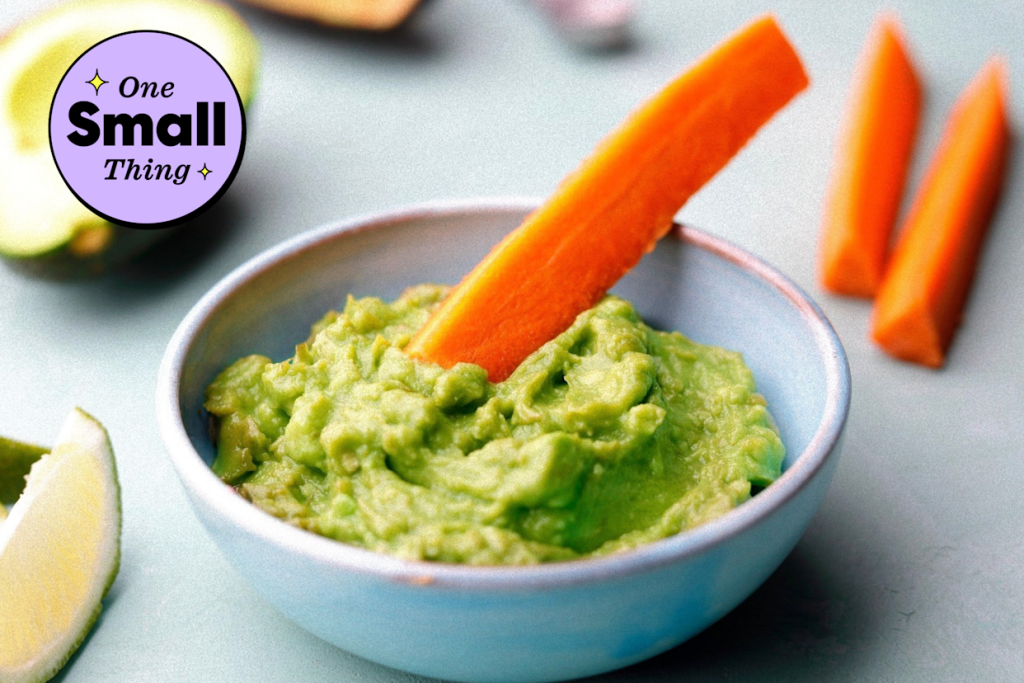
While Super Bowl starters aren’t exactly known for being healthy (looking at you, deep-fried chicken wings), there are a slew of game-day options that are good for you — without sacrificing any flavor. Try one of these 25 healthy Super Bowl snacks, whether it’s serving up turkey burgers, which are a healthier alternative to ground beef, or whipping up a protein-rich avocado dip and serving it with veggies. Or try making cowboy caviar (think pico de gallo with beans and even more chopped veggies).
Before you invite friends and family to come over and watch the big game, look up your local forecast. While you’re at it, see if the stars have any winning predictions by reading your horoscope. Then choose “one small thing” to make the week ahead healthier and happier. Let’s kick things off.
🍽️ Follow the 80% rule
Nearly everyone wants to live longer, but actually adopting healthy habits to add some years to your life can seem a bit overwhelming. Here’s one doable step you can take: Follow the 80% rule — eat until you’re 80% full and then put the food away. “In other words, eat until you are comfortably satisfied, not stuffed,” Anne Poirier, director of behavioral health at Hilton Head Health, tells Real Simple. The practice is adopted from Okinawa, Japan, one of the original “blue zones” where people tend to live the longest. “Eating like this helps regulate digestion, blood sugar and calorie intake naturally,” says Poirier. “Try slowing down when you eat your meals, pause about halfway through eating, use smaller plates and eat without distraction.”
🐴 Practice ‘horse breaths’
Feeling stressed out? Try “horse breaths.” “I use it with clients who feel tension in their jaw, chest or throat, or who struggle to slow their breathing when they’re feeling panicky,” Chloë Bean, a somatic trauma therapist in Los Angeles, tells Bustle. “This is especially helpful for people who feel keyed up, frustrated or irritated. It is a quick reset.” Here’s how to do the breathing technique: Inhale for 3 to 4 seconds through your nose. Slowly exhale through relaxed lips for 5 to 8 seconds, allowing them to vibrate or flutter. (In a nutshell: Do your best horse imitation.) Repeat three to six times.
🔑 Try this hack to remember where you left your keys
How many times have you gone to grab your keys or your glasses only to discover they’re not where you swore you left them? If your memory isn’t quite as sharp as it used to be, help yourself out by choosing a specific spot to keep items you reach for on the regular, such as a tray in your entryway for your keys and sunglasses. For items you don’t use every day, but tend to lose as well (think a hat or your gloves), try this trick: say where you’re putting it out loud — the more detailed the better. “Saying it out loud creates a better encoding because it makes you pay attention, and the verbalization creates a richer memory,” Mark McDaniel, professor emeritus of psychological and brain sciences at Washington University in St. Louis, tells the Associated Press. While you’re at it, try these 10 ways to improve your memory.
🍴 Load your dishwasher the right way
Much like the ongoing debate over which way the toilet paper should face (even though there is a correct answer!), people have a lot of opinions about how to load a dishwasher. Well, cleaning experts have spoken, and apparently, you should load your forks and spoons handle-down. “This exposes the ‘business end’ of the utensil to the most water and detergent,” Kristi Lord, co-founder of L’AVANT Collective, tells Real Simple. Knives, however, should point downward so you don’t accidentally stab yourself while emptying the dishwasher. Another key tip: avoid cramming utensils into the silverware basket. “The most important thing,” says Becky Rapinchuk, founder of Clean Mama, “is that the utensils are not stacked or crowded so the water and detergent can reach all surfaces.”
🥑 Munch on these surprising sources of potassium
What do tomato paste, lentils, avocado and dried apricots have in common? They’re all solid sources of potassium, a nutrient you may not be getting enough of. Chris Gunning, a clinical nutritionist at Rutgers University, tells GQ that potassium is an electrolyte that helps the body maintain proper fluid balance and is important for muscle contraction and nerve function. It can also help lower blood pressure. While bananas get most of the attention, these lesser-known sources of potassium pack a nutrient-rich punch (a 6-ounce can of tomato paste, for example, can have 1,724 milligrams of potassium, while a half a cup of cooked lentils has about 365 milligrams or more, along with protein and fiber).
🎉 Host a dinner party
Having a sense of community helps people live happier, healthier lives. If you feel like you’re lacking that and wish there were more social gatherings on your calendar, Priya Parker, author of The Art of Gathering: How We Meet and Why It Matters, has some advice: start hosting the events you’d like to attend. “The best way to get a seat at the table is to host the table,” she tells NPR. Think about activities you’ve enjoyed the most, whether it’s a dinner party (throw a potluck party), painting class (host an art night) or something else. If that feels like a lot of work, find a co-host or two who can help, allowing you to divvy up the responsibilities and still enjoy the fun.
🏃 Add just 5 more minutes of exercise
Even small bouts of exercise can help you live longer. A Lancet study found that adding just five extra minutes of brisk walking (about 3 to 4.5 mph) to your daily routine was linked to roughly 10% fewer deaths in the study’s eight-year follow-up period. Tacking on an additional 10 minutes daily was linked with a 15% reduction in all deaths. “Every movement counts, and as soon as you start doing any activity, you have so many different physiological changes in the body,” Ulf Ekelund, a professor of physical activity and health at the Norwegian School of Sports Sciences and lead author of the study, tells the Washington Post. Ekelund notes that being physically active keeps your immune system healthy, lowers the risk of inflammation and helps reduce blood pressure.
♨️ Don’t sleep with a heating pad
If you’re regularly using a heating pad while you sleep, whether it’s to help with chronic back pain or endometriosis or just to warm up on a chilly night, dermatologist Dr. Daniel Sugai has a warning: It can damage and discolor your skin. “It’s not a burn — it’s just repeated, chronic heat exposure that damages blood vessels and causes changes in pigmentation,” Sugai explains, adding that, if you keep up with the habit, the skin discoloration can become permanent. His suggestion: limit exposure to heating pads to 15–20 minutes, and avoid sleeping with any heated source that’s in contact with your skin.
🫀 Know the subtle signs of a heart attack in women
Don’t be fooled by what you see in the movies — not all heart attacks involve someone clutching their chest, especially in women. “You know the classic thing is that people say, ‘Oh it felt like an elephant was standing on my chest,’ or that the pain was so bad that they couldn’t stand it, and that’s not always the case with heart attacks, particularly for women,” Dr. Harmony Reynolds, director of the center for women’s cardiovascular health at NYU Langone Health, tells ABC News. In fact, women have lower odds of chest pain. Instead, the hallmarks of heart attacks in women can look like: pain in the upper back (particularly, between the shoulder blades), arm, neck or jaw, as well as nausea, vomiting and shortness of breath.
🍚 Save time with frozen brown rice
Frozen food is not only convenient, but it’s also more affordable than seasonal produce and is just as (if not more so) nutritious. While frozen vegetables and berries are obvious go-tos, there’s another underrated time-saver you might not have considered: frozen brown rice. Brown rice normally takes about 45 minutes to cook, while the frozen variety is typically pre-cooked, saving you time while still delivering fiber, magnesium and B vitamins to support digestion and help reduce heart disease risk, reports EatingWell.