Trump’s showdown with Congress is catching fire, weeks before Democrats take power
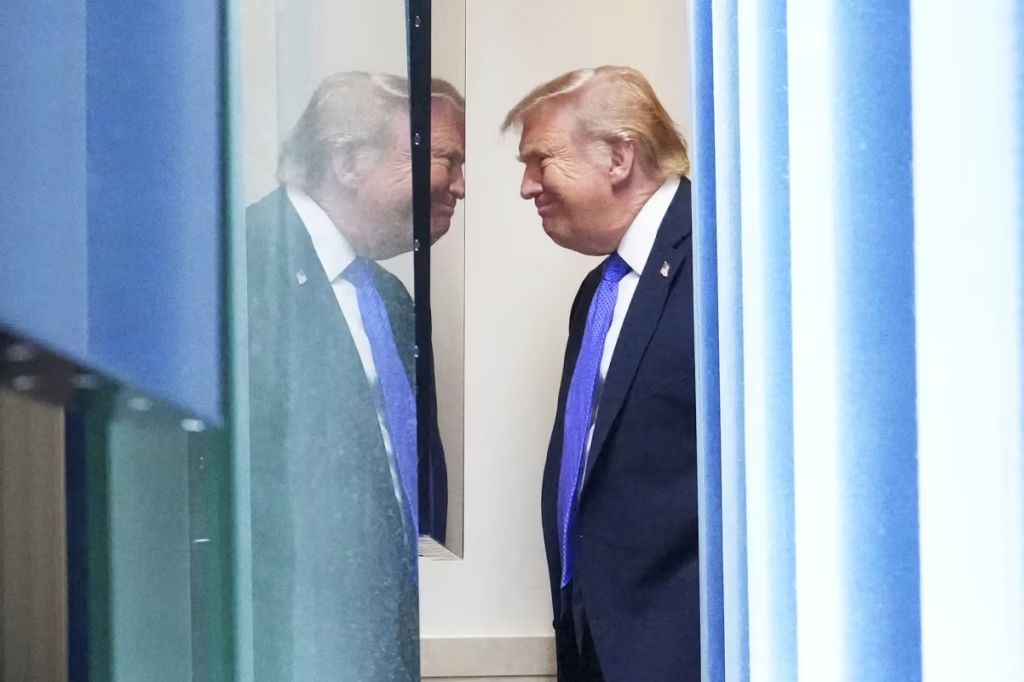
In a major power play, President Donald Trump is seeking to limit who, how and what Democrats can investigate as they gear up to use their new powers in the next Congress to target his alleged corruption.
Key Democratic investigators are pushing back, including against Trump’s executive order Friday that warned businesses that deal with the federal government to coordinate requests for information or communications with the White House.
Democratic Rep. Jamie Raskin, incoming head of the House Judiciary Committee, said Sunday that the order “has all the force of an interoffice memo. It’s like saying, ‘We’re closing early before the Thanksgiving holiday.’ It doesn’t mean anything in terms of federal law.” Raskin insisted on CNN’s “State of the Union” that “we have got the Constitution on our side.”
Trump ordered companies to comply with executive privilege, the president’s constitutional prerogative, to withhold information from Congress or the courts that could infringe on his office’s capacity to function. He stipulated that firms that refused would risk “the potential termination or cancellation of contracts and the potential debarment or suspension of contractors.”
Preemptive exchanges over congressional oversight on multiple fronts offer a taste of the intense Beltway battle sure to unfold next year. The administration has already threatened Democratic investigators with possible prosecution as it resists probes into White House dealings with corporate CEOs, Trump’s architectural projects, including his new ballroom; the business activities of Trump’s family and Cabinet members, and the origins and conduct of the Iran war.
The aggressive White House mobilization suggests the president’s claims of executive power will be as expansive in his own defense as they were when he went on offense early in his second administration. A fierce rearguard action was reinforced by the appointment of the combative Stephen Miller as his new chief of staff and House Republicans’ selection of Ohio Rep. Jim Jordan, an adept force of disruption, as their leader.
Treacherous days loom for companies that did business with Trump
Trump’s order previews a novel confrontation with Democrats over the scope of executive privilege, which is derived from the president’s Article II powers in the Constitution and the separation of powers. The concept seeks to protect the confidentiality of the president’s decision-making.
His order on Friday appears — taken to its limits — to imply that any administration business, including with outside contractors, is immune from investigation by Congress. Yet the Supreme Court held in various rulings that the privilege is not absolute and must be weighed against the need for public disclosure. It has stated that the courts, not the president, are the final arbiter in most cases.
Any prolonged legal showdown with Congress over the constitutionality of likely blanket privilege claims would mirror a classic Trump strategy in life, business and politics: using the legal system to delay accountability.
Executive branch power consolidation over recent decades went into overdrive with Trump, who believes there are few limits on his authority and has sometimes been emboldened by a conservative Supreme Court majority with its own expansive view of the presidency.
But Trump’s order also points to another significant possibility: that companies who contract with the federal government could find themselves drawn into a bitter fight with two separate and co-equal branches of government. Such firms might risk their immediate business prospects by declining to cooperate with the White House or antagonize Democrats who might — depending on future election results — take the presidency and maintain control of Congress when Trump leaves office in two years.
The Trump Justice Department is unlikely to prosecute executives who refuse to comply with congressional subpoenas. But a future administration might take a different view, and top firms could be faced with agonizing political choices.
The looming showdown may help define how the public perceives the new House and Senate. Democrats are under pressure to immediately alleviate voters’ cost-of-living woes — a mission that will require the support of a veto-wielding president already balking at their investigative ambitions. But voters also wanted Trump’s bulldozing presidency reined in, and if Democrats have a mandate, it is partly based on concerns about alleged corruption.
Political complications to come were reflected in Trump’s comments in a Fox News interview Saturday that he could do “tremendous things” on healthcare and even on immigration with Democratic leaders Sen. Chuck Schumer and Rep. Hakeem Jeffries. But on Sunday, he wrote on Truth Social that Schumer, who faces a leadership challenge from Maryland Sen. Chris Van Hollen, “failed badly” as leader before, “and I have little doubt that he will fail again.”
Trump is already pitching a narrative that Democratic probes are overreach amounting to political persecution — a move he used effectively in winning back the White House in 2024, despite being investigated over his attempt to overturn the 2020 election results and his alleged hoarding of classified material.
‘A lawless royal edict’
Raskin insisted on “State of the Union” that Democrats won’t be deterred.
“Trump is scrambling to cover up all of the corruption, the kickbacks, the bribery, the insider influence,” the Maryland lawmaker told CNN’s Dana Bash. “They have issued a totally unprecedented and lawless royal edict that private companies not speak to congressional investigators. Every US company, every citizen owes Congress his or her truthful, honest testimony when called to come and testify. And Donald Trump may not like that, but that’s the reality of the situation.”
Democrats have already made clear that their investigative sweep will be huge.
Sen. Richard Blumenthal has sent letters to multiple companies ahead of a planned inquiry into the funding and construction of the White House ballroom. Rep. Henry Cuellar, top Democrat on the House Appropriations Homeland Security subcommittee, is seeking to investigate contracts awarded by the Department of Homeland Security in the last two years. Democratic Rep. Robert Garcia, incoming chair of the House Oversight Committee, sent letters requiring the preservation of documents to Vice President JD Vance, members of the Trump family, Miller and Attorney General Todd Blanche, among others.
Democratic Rep. Jim Himes, in line to run the House Intelligence Committee, last week warned that Congress would withhold government funding for systems developed by Elon Musk’s SpaceX if Musk and the Trump administration refuse to disclose who is responsible for ordering the slowdown of Starshield, Ukraine’s military-grade Starlink satellite service.
Democrats may also come calling on law firms that bowed to Trump’s pressure to avoid litigating politically sensitive cases.
The threat of Democrats using Congress’ funding power to enforce their investigative push is a serious one for both the administration and firms that do billions of dollars’ worth of contracting work for the federal government.
The coming months therefore look treacherous for CEOs and firms caught in Washington’s political stew, threatening bottom lines and raising the possibility of reputational damage to corporations that abhor such political complications.
Brad Smith, president and vice chairman of Microsoft — which contributed to the White House ballroom project, according to a list of donors provided by the administration — told CBS’ “Face the Nation” on Sunday that “we always have the same philosophy for every administration regardless of which political party it comes from. We partner where we can. We stand apart when we should.”
Trump’s executive order comes with teeth. It tasks the Office of Management and Budget with ensuring all contractors comply with its requirements “to enhance efficiency and the protection of Executive information.”
And White House Counsel Will Scharf told Garcia this month that the “administration will not be extorted and will not be cowed by unlawful process motivated by animus, pettiness, hatred, or any other unlawful motive to intimidate, penalize, or interfere with the lawful functioning of government.”
It’s clear that one key outcome of the midterm elections will be a monumental clash over government power, the Constitution and the Trump’s vision of the presidency that will soon define the contours of the 2028 election.