5 Backyard Features That Secretly Attract Snakes, According to Experts
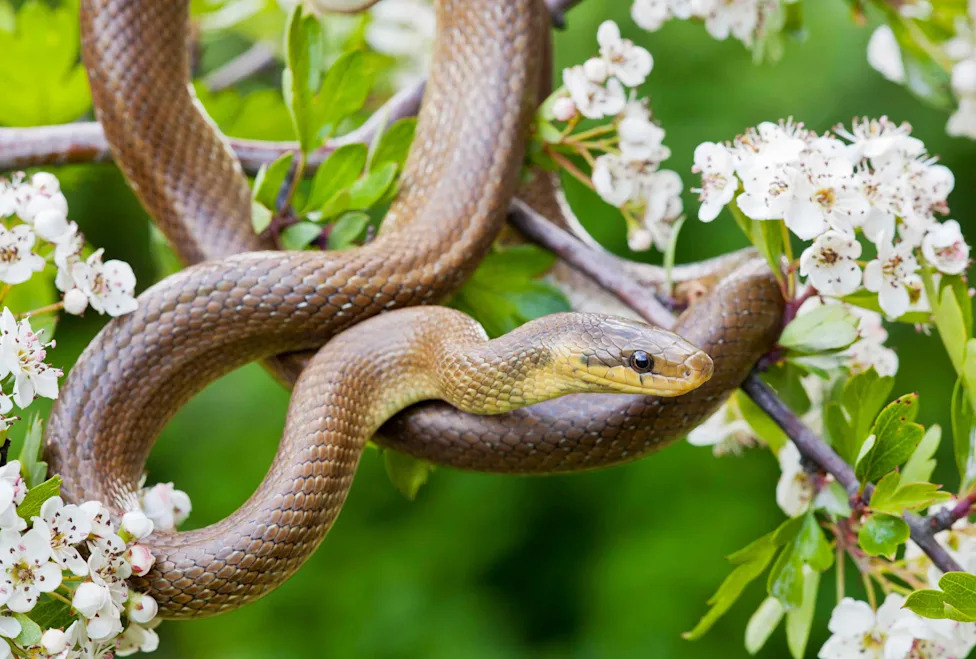
While most snakes are harmless and help control rodent pest populations, spotting one (or multiple) in your lawn and garden can be an unwelcome surprise. If you’ve noticed more snakes in your yard lately, it’s possible certain backyard features are leading them straight to your property. From bird feeders to lawn clutter, snake experts share the things that may be attracting snakes to your lawn—and what to do to reduce your chances of an encounter with these reptiles.
Meet Our Expert
- Emily Taylor, professor of biological sciences at California Polytechnic State University and director of the Physiological Ecology of Reptiles Laboratory
- Stephen P. Mackessy, professor of biology in the Department of Biological Sciences at the University of Northern Colorado
Related: How to Spot a Snake Hole in Your Yard—and What to Do If You Find One
Low-Growing Bushes
Snakes overheat in the sun and prefer to find shade under low-growing bushes in the wild. Plants like rosemary and lavender offer shade and hiding places for snakes while giving them a clear view of their surroundings. “This provides a refuge from weather and predators,” says Stephen P. Mackessy, professor of biology at the University of Northern Colorado. Bushes like these can also act as an attractant for rodents and other “snake food,” he says. To minimize the chances of attracting snakes to your yard, keep areas close to the house and outdoor activity areas free of weeds and dense vegetation, and move these low-growing bushes farther from the house.
Bird Feeders
Anything that attracts rodents will attract snakes, and bird feeders are a huge draw for mice. “Bird feeders often result in a lot of seed distributed on the ground near feeders, which also attracts rodents, which in turn can attract snakes,” says Mackessy. Remove bird feeders or clean up any spilled birdseed to reduce the chances of attracting snakes to your yard and garden.
Man-Made Piles
This includes anything snakes can easily crawl under, from firewood and rock piles to stacked tiles, tin siding, and plywood. These are all things Emily Taylor, professor of biological sciences at California Polytechnic State University, calls “snake mansions.” Each creates a few inches of space that snakes use as a den. Remove these hiding places or relocate them away from your house to decrease the chances of a snake encounter. For example, Taylor says firewood should be stored on a table or other platform elevated a few feet above the ground.
House Crawlspaces
Snakes are attracted to house crawlspaces because they are dark, cool, and free of predators. If your home is not on a concrete slab but rather has a crawlspace or a basement or a porch that animals can hide under, close off access to these spaces or snakes may move in, says Taylor. Inspect the perimeter of your porch, crawlspace, and basement and seal all gaps and cracks where snakes might gain entry. You can use wire mesh, caulk, or steel wool to cover any small openings.
Water Sources
Swimming pools, landscaping ponds, and similar bodies of water can act as an attractant for snakes, especially in more arid areas, says Mackessy. But even a leaky spigot or hose can attract a snake, adds Taylor. This is because it’s not necessarily just the water that snakes go after (although snakes do drink the water as well); it’s the other animals water attracts. Mice and rats tend to want easy access to water sources, and if your home has this, snakes are more likely to appear. Remove water sources, when possible, to reduce your chances of attracting snakes.
Read the original article on Martha Stewart