Opinion – In a year of climate extremes, clean energy rises to the occasion
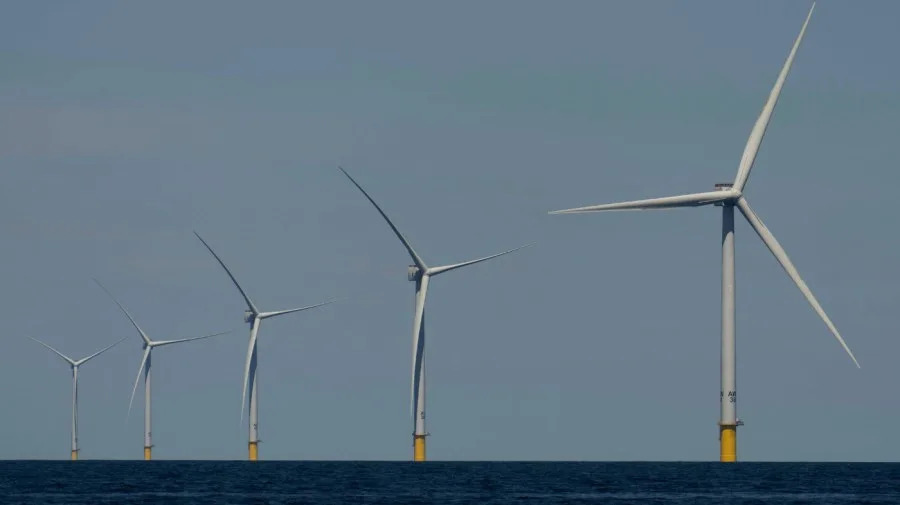
The future of New England’s electricity supply — affordable, home-grown, reliable and clean — is proving itself right now in the waters off Massachusetts and Rhode Island.
The turbines of South Fork Wind and Vineyard Wind powered hundreds of thousands of homes and businesses during the record-breaking cold snaps and storms of the last three months. Wind power helped the region save millions of dollars that otherwise would have gone to high-priced polluting gas and more emergency use of filthy oil plants.
The importance of this outstanding performance cannot be overstated. South Fork and Vineyard Wind are America’s first two utility-scale offshore wind projects. They reliably kept power flowing at steady low cost under long-term contracts when it was needed most in extraordinarily challenging conditions. Unlike gas, the cost of the North Atlantic wind didn’t go up by 60 percent when it got cold. Unlike gas, wind can perform best in the winter.
Despite the constant attacks from the petroleum industry, its enablers in the Trump administration and widespread perceptions that wind power is on the ropes, South Fork and Vineyard Wind are just the first shots in a clean energy revolution.
South Fork Wind, built in large part in Connecticut and located less than 20 miles from Block Island, has proven itself for more than a year, powering 70,000 homes and businesses on Long Island with a dozen turbines, each twice the size of the Statue of Liberty. Over the course of 2025, South Fork provided electricity on 99 percent of all days and across 92 percent of all hours.
Vineyard Wind, nearing completion but already running at 70 percent capacity, provided power to approximately 280,000 homes and businesses, producing electricity seamlessly through January’s heavy snows and winds at a fraction of the cost the power grid was forced to pay for fossil fuels during peak hours. Vineyard Wind is erecting the last of 62 turbines now in the waters off Massachusetts. The completed 804MW project is expected to power 400,000 homes and businesses, and is scheduled to deploy power in the next few weeks. The project has created more than 3,700 jobs in New England and helped redevelop the Port of New Bedford.
Also in the next few weeks, Revolution Wind off Point Judith, Rhode Island, will start to come online, eventually powering 350,000 homes in Connecticut and Rhode Island. Revolution Wind has created more than 2,000 jobs and revitalized the Port of New London, Connecticut.
South Fork, Vineyard Wind and Revolution are not only going to provide reliable homegrown energy and jobs to New England and New York, but each year, by replacing fossil fuels, they will also prevent more than 3 million tons of carbon from fouling our air and lungs. That’s the equivalent of taking more than 650,000 cars off the road.
Following in quick order, Sunrise Wind plans to begin providing electricity to 600,000 homes this year from turbines in the waters between Rhode Island and Long Island. Coastal Virginia Wind, which can power 660,000 homes, is on pace to deploy energy this month from the ocean off Virginia Beach.
Each of these wind projects is expected to produce electricity affordably from wind for the next 30 to 35 years with no supply problems in winter, no soaring costs for fuel, no leaky pipelines and no pollution.
Over the last year, New England has been besieged with proposals to burn more gas, oil and coal, with calls to build multi-billion pipelines and with unsubstantiated — and untrue — claims alleging that wind turbines have killed whales. What is driving much of the negativity of the last year appears to stem from a shared set of concerns among fossil fuel companies worried about losing market share and wealthy landowners concerned only for their ocean views. Fossil fuel companies have launched disinformation campaigns to try to stop or delay offshore wind.
Despite the fossil fuel industry’s attempts to strangle clean energy, wind and solar are winning. Nationally, solar, wind and batteries dominate in the race to add new sources of electricity to affordably meet soaring demand. Solar is the cheapest and fastest growing source of energy in the U.S. and globally.
Wind helped keep our lights burning this winter. During the heat wave that hit the region last summer, rooftop solar and batteries saved us from losing power — and saved consumers over $20 million in fuel costs.
Seeing the attacks on wind to their south, Canada has proposed to build the turbines in Canadian waters and sell us the power. While contracts for Canadian wind could help keep the Northeast investing in clean energy over the next few years, this winter has shown us that New England can create its own energy supply.
After the Trump administration met in February with coal company CEOs in the Oval Office, it continued its attacks on wind and solar. Time after time, in the last few months, what has saved offshore wind is the rule of law — repeated court rulings that have allowed the projects to continue, preventing us from going backward on energy — and keeping the lights on.
What is happening in the waters of New England right now proves this is worth the fight.
Caitlin Peale Sloan is vice president for Climate and Energy at Conservation Law Foundation.
Copyright 2026 Nexstar Media, Inc. All rights reserved. This material may not be published, broadcast, rewritten, or redistributed.
For the latest news, weather, sports, and streaming video, head to The Hill.