These 5 Exercise Types Are Linked To Longer Life And Healthspan
“Hearst Magazines and Yahoo may earn commission or revenue on some items through these links.”
Training for longevity has become a major fitness trend—but in health science, longevity means far more than simply living to an old age. It refers to extending both lifespan and healthspan: the number of years you live free from chronic disease, disability, and functional decline. In other words, longevity is about staying strong, mentally sharp, and physically independent for as long as possible. And some fitness modalities are better than others when it comes to helping you live longer and stronger.
Longevity is “how long you can stay strong, capable, independent, and actively engaged in your own life,” says Kat Pasle-Green, NASM-CPT at Bay Club. Exercise is medicine, when you really think about it. If you are engaging in a form of exercise that has longevity benefits, that means “it preserves muscle, maintains metabolic health, strengthens the heart, protects the bones, enhances mitochondrial function, and supports brain plasticity,” adds Mariana Riveros, MD, a general practitioner specializing in longevity-focused treatment at SHA Wellness in Mexico.
For what it’s worth, you are already supporting longevity if you exercise regularly! But research shows that not all types of exercise contribute equally to long-term health. Some training modalities are especially effective at protecting against age-related diseases and preserving physical function as we age.
So, longevity isn’t just about adding years to your life—it’s also about adding quality to those years. “That can mean better energy, stronger muscles, steady blood sugar, a clear mind, and joints that don’t ache every time you move,” says Madison Shaw, RD, CPT, a personal trainer at Life Time in Florida and a registered dietitian at MIORA.
Running in your 60s, deadlifting in your 70s, and snowboarding in your 80s? Yes, please. Keep reading to learn about the best types of exercise for longevity, according to fitness and longevity experts.
9 Best Types Of Exercise For Longevity
1. Resistance Training
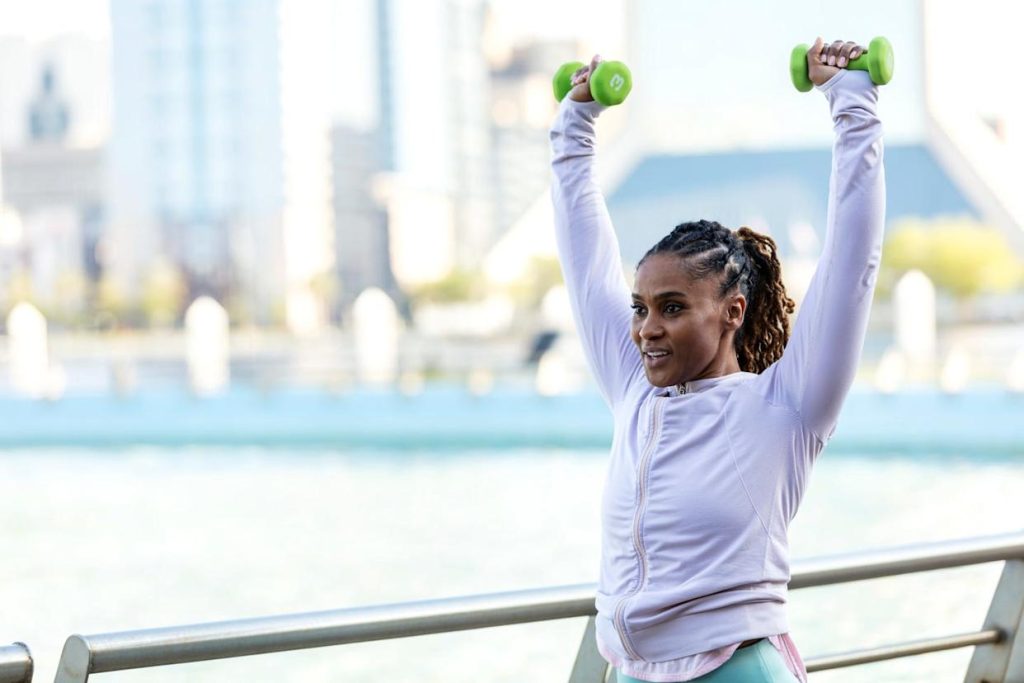
Resistance training is any exercise where your muscles work against an external load to produce force, says Pasle-Green—think dumbbells, barbells, resistance bands, cable machines, and so on. It’s the key to training for longevity because it combats age-related declines in muscle mass, function, and strength, she adds. Resistance training also improves bone density, how your body breaks down and uses sugar to lower insulin resistance risk, and overall independence with movement (like climbing stairs and carrying groceries with ease).
Muscle-strengthening activities were associated with a 10 to 17 percent lower risk of all-cause mortality, cardiovascular disease, total cancer, diabetes, and lung cancer in a 2022 British Journal of Sports Medicine review of studies on the connection between muscle-strengthening activities and risk of chronic disease and early death.
2. Power Training
This modality blends strength and speed work by focusing on explosive movements like kettlebell swings, medicine ball slams, and jump training, says Pasle-Green. Power training recruits type II fast-twitch muscle fibers, which you use to lift heavy and sprint, and they’re important to maintain to stay independent in later years, she adds. This type of training can also enhance your reaction time, aiding in fall prevention and functional mobility.
Research suggests that muscle power—not just strength—may be an important marker of longevity. A 2025 study in Mayo Clinic Proceedings tested relative muscle power and strength in nearly 4,000 people between the ages of 46 and 75 over 21 years, measured through handgrip and upper row movement tests.
The results showed that lower relative muscle power was much more strongly linked with the risk of dying over the study period than lower muscle strength, even after accounting for factors like body weight. This suggests that how quickly you can generate force (muscle power) may be a better predictor of mortality than muscle strength alone.
3. Zone 2 Aerobic Training
This type of training is any movement that gets your heart rate to 60 to 70 percent of its maximum (which you can calculate by subtracting 220 from your age), says Pasle-Green. This can look like a brisk walk, elliptical, cycling, or a similar bodyweight activity at a moderate and sustainable pace.
Zone 2 training is the foundation for cardiorespiratory health because it’s sustainable and accessible, and builds your aerobic base by strengthening the heart and improving how your body uses oxygen, says Dr. Riveros.
In fact, moderate physical activity (walking, hiking, gardening, housework, dancing, shopping, golf, pickleball, doubles tennis, volleyball, and leisurely bike riding) reduced risk of cardiovascular disease mortality and all-cause mortality substantially better than very high levels of vigorous physical activity and overtraining, according to a 2023 review in Missouri Medicine.
4. Interval Training
Interval training is a great way to improve your VO2 max, a measure of oxygen intake and use during intense exercise, and an excellent snapshot of your cardiorespiratory health, says Pasle-Green. (Your oxygen consumption PR, if you will!) It’s also arguably the strongest mortality predictor in exercise science, according to many experts as well as some studies. A 2022 meta-analysis of studies on cardiorespiratory fitness and all-cause mortality risk in Mayo Clinic Proceedings found that overall, each time a participant’s VO2 max increased by one, their mortality risk was reduced by 11 percent.
To improve your VO2 max, pair intervals of high-effort work with enough rest that allows for full recovery before repeating, says Pasle-Green. You can do this through running, cycling, swimming, HIIT, and even cross-country skiing.
For example, try pushing for about one to three minutes at your high-intensity level. Monitor your effort by using rate of perceived exertion (RPE), or how much you feel like you’re exerting, on a scale from 1 to 10, says Riveros. Your higher-intensity intervals can fall at a 7 or 8 on the scale, which should be challenging but sustainable.
Then, you can switch to an easy pace for two to five minutes as you wait until you’re able to talk in complete sentences again. You can continue alternating between these for 20 to 30 minutes, and as your fitness and VO2 max increases, your pace will naturally increase, so it’s always effective and challenging.
5. Balance Training
When it comes to balance, you either use it or lose it. Better balance counters age-related motor unit loss (the neurons that control and signal your muscles to work) and protects against falls and subsequent injuries, says Pasle-Green. A 2024 review in Research on Aging looked at studies on the association between completing a balance challenge and mortality in older mobile individuals. It found that being unable to complete the test was significantly associated with a higher risk of mortality.