Trump’s ICE problem is back and risks spiraling out of control
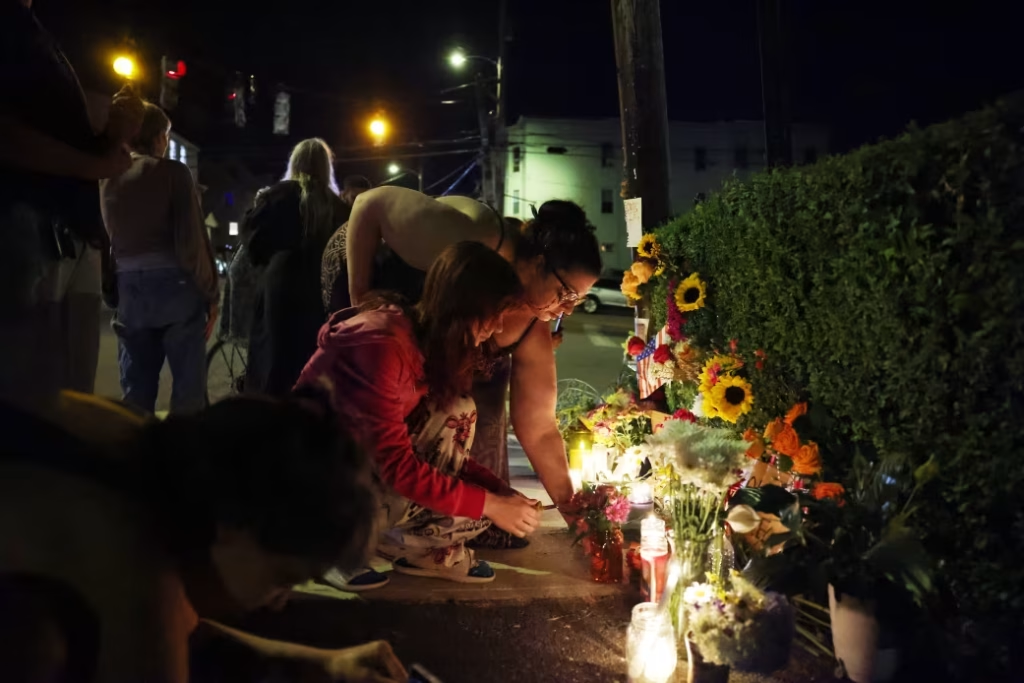
Few if any events in President Donald Trump’s second term have caused his administration to course correct as much as when federal agents killed two protesters against its immigration crackdown in Minneapolis in January.
Two top officials overseeing that crackdown have since departed, including Homeland Security Secretary Kristi Noem, and the administration tacitly acknowledged that things had gotten out of hand. Polling backed up just how bad the killings were for the administration.
But things are risking getting out of hand for the administration on this issue again — and at a pretty troubling time, politically.
After months of relative quiet when it came to major deportation controversies, federal agents have killed two people this month — one in Texas last week, then another in Maine on Monday.
As with the killings of Renee Good and Alex Pretti in Minneapolis, the episodes appear primed to test not just Americans’ tolerance for Trump’s immigration agenda, but also the administration’s credibility. The Department of Homeland Security has routinely made dubious and even flatly false claims about such incidents, and questions about its accounts are popping up again.
Notably, in the most recent shooting death in Maine, DHS doesn’t even claim the man who was killed was threatening the lives of the officers — just that he was fleeing the scene and that the Immigration and Customs Enforcement (ICE) officer was “fearing for public safety.” But that’s generally not a reason to shoot someone.
So where does this issue stand politically?
It’s pretty clear that Minneapolis’ impact has lingered. That’s because, despite Trump’s demonstrated success in reducing illegal border crossings to historic lows, he remains substantially underwater on the issue of immigration.
A Reuters-Ipsos poll last month showed Americans disapproved of Trump on immigration, 55%-37%. And they said immigration policy was on the “wrong track” rather than the right one by a 51%-35% margin. Those numbers were very similar to where they were in the aftermath of Good’s and Pretti’s killings in a poll conducted in February.
Quinnipiac University polling showed Trump’s immigration numbers improving modestly since February — going from 21 points negative on immigration to 13 points negative last month. But he was still significantly underwater.
ICE, whose agents shot both people this month, also remained more unpopular than ever, even before these latest shootings in Texas and Maine.
A Marquette Law School poll in May showed Americans had an unfavorable view of ICE by a wide margin, 61%-36%.
That roughly 6 in 10 who disapproved of ICE was similar to what other pollsters found in January, in the aftermath of Good’s and Pretti’s killings.
And even just having ICE back in the news would seem to be bad for the Trump administration given the agency’s longstanding unpopularity. In fact, polling as far back as a year ago — well before the Minneapolis killings — showed ICE hitting what was then new levels of unpopularity.
In other words, Americans seem to have had a problem with how the administration has carried out its deportations for a long time. The January killings appeared to raise the salience of that issue in ways that were unhelpful for the administration.
And that’s the political danger in the killings in Maine and Texas.
Much remains to shake out there, and the situations aren’t completely analogous to what happened in Minneapolis.
One key distinction is the lack of video footage as substantial as existed in Minneapolis, where many protesters were around to capture the events. The agents in both shootings this month don’t appear to have worn body cameras, despite efforts after Minneapolis to get such agents outfitted in them.
That footage in Minneapolis not only contradicted what the Trump administration had initially claimed about the killings; it led Americans to conclude by large margins that the immigration agents were at fault.
For now, Republican Sen. Susan Collins of Maine says the shooting in her state “raises sufficient critical questions” that she urged DHS to stop non-urgent vehicle stops, which DHS appears to have agreed to do. And both she and Maine Sen. Angus King, an independent who caucuses with Democrats, are calling to mandate body cameras and for ICE not to investigate itself.
But it’s become abundantly clear that the Trump administration has gone too far with its deportation agenda for Americans’ taste.
Americans broadly liked the idea of deporting undocumented immigrants during the 2024 campaign, and that issue spurred Trump back to the presidency after an influx of illegal immigration during President Joe Biden’s term.
But Americans have routinely said the administration’s tactics have rubbed them the wrong way, according to polling — from wrongful deportations, to sending people without due process to a brutal prison to El Salvador, to the crackdowns in places like Chicago and Minneapolis. After Pretti’s killing, polls showed 6 in 10 Americans said ICE had gone “too far.”
And now, after the administration had seemed to move beyond a political liability, those tactics are back in the news.