Brendan Sorsby ruling: Rogue Texas judge just unleashed hell when it comes to gambling in sports
Note to self: If you ever get in any kind of trouble, facing the potential loss of millions of dollars, make sure to do it in Texas while playing college football for a program backed by an increasingly well-known Texas oil man.
Not to suggest the books were cooked in favor of Texas Tech quarterback Brendan Sorsby, who successfully got an injunction Monday that will (for now) allow him to play despite BETTING ON HIS OWN TEAM’S GAMES. But one gets the sense, reading the injunction from Texas District Court Judge Ken Curry, that if he were in charge of ruling on all American crimes, we would have empty prisons.
“This Court finds that [Sorsby] has demonstrated that he will suffer a probable, imminent and irreparable injury if this Court does not issue this temporary injunction because he will be unable to participate as a member of Texas Tech University’s 2026 football team.”
Uh, yeah. That’s kind of the point Judge Curry, you big softie.
You break a law — or in this case a black-and-white rule that every sports league in America agrees on — and sometimes the harm is going to be irreparable. When the rule in question is arguably the most important in all of sports, that’s how the cookie crumbles.
Or at least, that’s how it’s supposed to work. We can have really good arguments about how much the ubiquity of sports gambling has contributed to addiction, the hypocrisy of sports leagues taking sponsorship money from sports betting sites (the NCAA, for what it’s worth, does not do this) while prohibiting their athletes from using them or whether athletes should be able to bet on sports other than the ones they play.
But there’s one rule that has basically universal approval: If you’re on a college or pro team, you cannot bet on games you’re involved with. No contingencies, no exceptions, no matter the amounts of money involved or how big of a role the player had on the team.
The integrity of sports depends on it.
But here comes good ol’ Judge Curry, deciding it’s more important to protect Sorsby’s right to make millions of dollars playing for Texas Tech and get the benefit of elite training and coaching because he has a gambling addiction. So he slapped a two-game suspension on him (how does that even work?) and tried to make the NCAA look like the bad guy for being mean to a gambling addict.
Sorry, but at best, Judge Curry is misguided. At worst, he’s … well, he’s wrong.
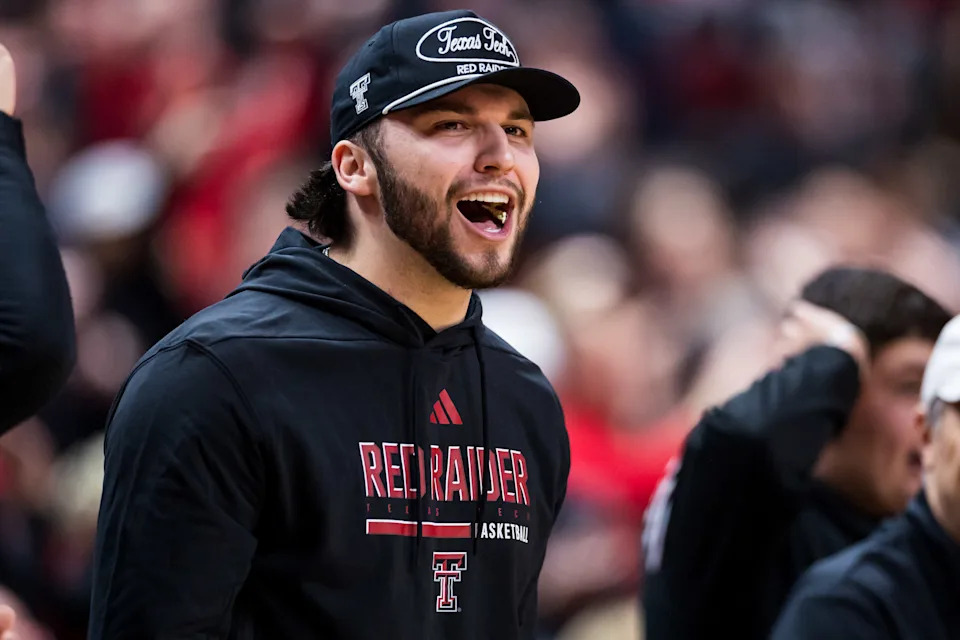
There’s no reason to doubt that Sorsby’s illness is real. There is documented evidence of making thousands of bets for thousands of dollars, even transmitting money to others so they could place bets for him. It certainly has the earmarks of a gambling addiction for which should get treatment.
But some of those bets involved teams he played for, and so the NCAA appropriately banned him for life. You should not be able to sob story your way out of that punishment.
Look, we should all try to err on the side of compassion and rehabilitation when judging young people’s mistakes. But playing college football is not a right and should not be treated as such when someone so flagrantly violates a core principle of ensuring the competition is legitimate.
The NCAA gets a lot of stuff wrong, but sometimes it gets it right. By banning Sorsby, it was doing its job as the steward of the game and acting to protect thousands of other athletes from the suspicion that they will be subjected to unfairly as a result of this ruling.
Play 2026 Soccer Pick ‘Em with FOX One and make your picks for the world’s biggest soccer tournament
That’s why it was so disappointing to see the statement from Texas Tech booster Cody Campbell, the billionaire mentioned above, who has made it his mission to shake things up in college sports. If he wants to spend big on rosters, fine. If he had the juice to insert himself into the political arena and shape the way Congress wrote the Protect College Sports Act, fair play to him.
But when he says, as he did in a statement Monday, that “This unfortunate situation is the outcome of a broken system,” that’s where I begin to question motives.
“Until there is a permanent solution, Texas Tech and its student athletes have to do the best they can to navigate and compete amid the chaos that exists in the reality of the world we live in.”
Sorry, but that’s disingenuous garbage.
Campbell is suggesting here that the culture of “don’t like the rule, sue the NCAA” is the root of the problem here and his job is to expose that rule and fix it. That’s sort of been his explanation for why he’s spent such incredible amounts of money to supply Texas Tech with good players — make the system look so ridiculous that it eventually snaps back to reality.
But all of the court cases against the NCAA in recent years have asked the question about whether rules restricting athletes’ ability to make money and transfer freely are legal. For better or worse, those are legitimate questions to ask and litigate.
This one is not. If Sorsby has a right to maintain his ability to play after betting on his own team — a rule that every other sports league also takes very seriously — then sports pretty much cease to exist as a legitimate enterprise.
The “system,” in Sorsby’s case, worked just fine. He got caught, he got punished and he should pay the price for his actions.
He shouldn’t go to jail. He shouldn’t have to pay fines. He just shouldn’t play college football anymore.
It is hard in 2026 to get anyone to root for the NCAA, which will appeal this ruling out of self-preservation and principle. But somehow, Judge Curry has pulled off the impossible.