LIRR strike begins after MTA fails to reach wage hike deal with union, disrupting 300K commuters
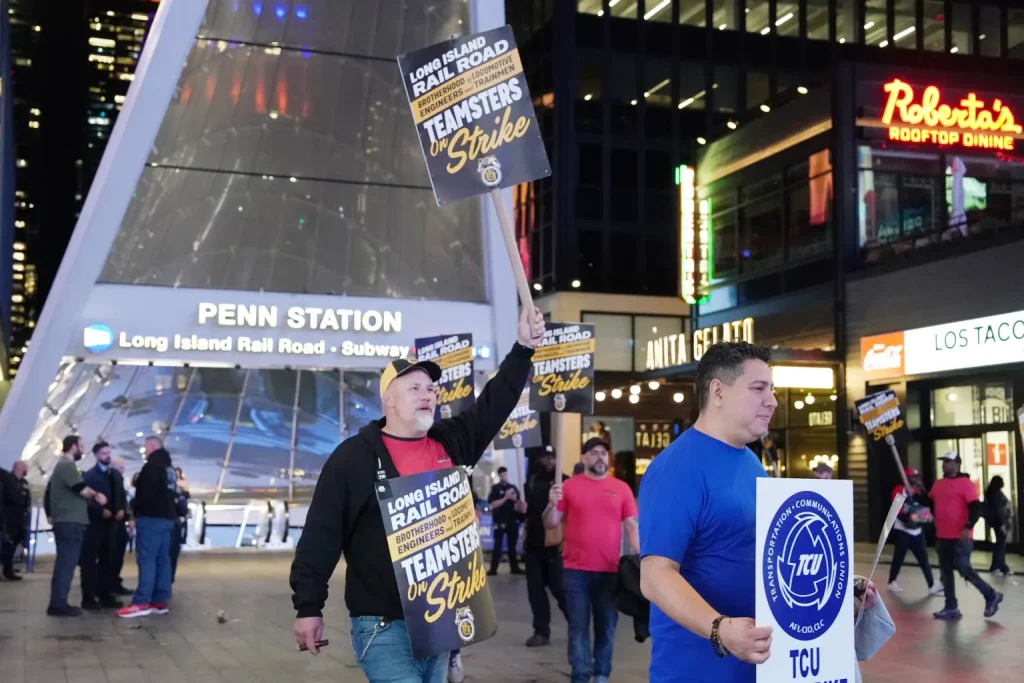
A transportation nightmare gripped Long Island Saturday as the first full day of the massive LIRR strike left hundreds of thousands of travelers completely stranded and worried about the workweek ahead.
With over 3,500 engineers, signalmen, and trainmen representing five unions officially off the tracks after wage talks with the Metropolitan Transportation Authority completely collapsed, a devastating travel blackout paralyzed the region.
MTA Chairman Janno Lieber said the unions rejected the MTA’s final offer that “literally gave them everything they said they wanted in terms of pay.”
“For me, it’s become apparent that these unions always intended to strike,” he said. Their strategy is to inconvenience Long Islanders and try to force the MTA and the State to do a bad deal.”
Union officials claimed they did everything they could to reach a deal but had no choice but to walk off the job. They also claimed their members need higher wages to keep up with inflation.
Rank-and-file workers apologized to inconvenienced commuters on Saturday.
“For the commuters out there, this is not a fight against them,” Karl Bischoff, a locomotive engineer who has worked 29 years for the LIRR, told The Post while picketing outside Penn Station.
“Commuters are our families, our friends, our neighbors,” said the 55-year-old.
“We apologize, but unfortunately, this is what it has come to because the MTA does not want to bargain in good faith,” he claimed.
The work stoppage of North America’s largest commuter rail line – its first since 1994 – began at 12:01 a.m. Saturday, after negotiations over a new contract stalled over workers’ salaries and healthcare costs. It was unclear when negotiations would resume.
The strike is expected to affect nearly 300,000 commuters who rely on the LIRR to travel between Long Island and New York City.
The MTA will offer free shuttle buses between six locations on Long Island and two subway stations in Queens. But it won’t accommodate all LIRR riders, and the shuttles won’t roll out until Monday – leaving Long Islanders with tickets to the Mets-Yankees Subway Series games this weekend at Citi Field scrambling to find other transit options.
The five striking unions – which represent half the LIRR’s workforce – are reportedly demanding a retroactive 9.5% wage increase that covers the past three years.
It’s the same raise package the MTA offered other unions in recent months. However, the LIRR unions also want a 5% hike for the current year, too, which the agency rejected and countered with a 3% increase and a lump-sum payment it claims brings the total to 4.5%.
The MTA has said median salaries for the five striking unions averaged more than $136,000 last year – making them the highest-paid rail workers in the nation.
When including health insurance and other fringe benefits, their average compensation exceeds $200,000, according to the MTA.
Both Lieber, who earned $420,599 last year, and Gov. Kathy Hochul – who is seeking re-election this year – called on LIRR commuters to work remotely from home, if possible, use the shuttle service, and prepare for heavy traffic congestion and limited parking if they decide to drive into NYC.
Sean M. O’Brien, general president of the International Brotherhood of Teamsters, declared the LIRR “owns this strike.”
“Union workers have sacrificed so much for the railroad for years while consistently bargaining in good faith for a fair contract,” said O’Brien, whose powerful bargaining group includes the Brotherhood of Locomotive Engineers and Trainmen that is striking.
“The LIRR is stranding passengers while denying wages, benefits, and respect to the BLET Teamsters and other hardworking union members.”
State Comptroller Thomas DiNapoli estimated the strike could cost up to $61 million in lost economic activity per day, based on prior analysis, inflation and rider trends.
The strike is already caused hell for commuters on Saturday.
Shelly Drucker, 27, was hoping to take the LIRR from Jamaica to Babylon on Long Island to visit her mother in the hospital but instead of paying $13 to use the rail line, she will be shelling out $126 on Uber. Normally, an Uber would cost around $70-$80.
“It’s annoying,” she said. I don’t get [where] all the priorities are in America right now. They’re not here.”
Valero M. 56, who lives in Richmond Hill and works at JFK Airport, said the strike will be an albatross for his commute.
“I can’t work from home. I work for an airline,” he said.
“It’s going to affect me because if I don’t work, I don’t get paid , and I can’t come up with money I don’t have to provide for private transportation,” he continued.