Your yoga mat is pretty gross. Here’s how to clean it the right way
Between the sweat, dead skin and floor grime, your yoga mat gets gross fast. But let’s be honest. When was the last time you cleaned it? If you can’t remember, it’s time to stage an intervention before you press your clean face into the exact spot where your sweaty feet were just standing, especially if you do yoga before bed. Maintaining a clean mat not only extends its life and keeps it in pristine condition, but also benefits your skin and your health. Yoga mats are spongy, so when they’re dirty and damp, they become a breeding ground for bacteria — a surface you don’t want your face or hands touching.
To get all the dirty details, Yahoo spoke with double board-certified dermatologist Dr. Elizabeth Bahar Houshmand, MD and Jem Mantiri, a RYT 500 yoga instructor, to uncover the hidden dangers of a grimy mat. Read on for their breakdown of the health hazards, along with a guide on how to properly disinfect your gear.
Why you should clean your yoga mat
It’s an unpleasant reality, but your yoga mat is essentially a giant sponge. During a yoga session, and especially in hot or power yoga, your body produces sweat, oils and dead skin cells that seep into the material. If left damp, that porous surface becomes a warm, humid breeding ground for bacteria, creating a surface you really don’t want to touch your face or hands with, especially if it’s shared with others.
Maintaining a clean mat isn’t just about extending its lifespan. It is critical for your health. Mantiri notes that mats can “get funky fast” due to sweat buildup, and an unpleasant smell is often the first sign they need attention. Research backs this up. A 2018 study found high levels of Staphylococcus aureus on shared fitness equipment, including exercise mats, and this bacteria was particularly prevalent on surfaces that were frequently touched and exposed to sweat.
The consequences go beyond a bad smell. Houshmand warns that dirty mats can harbor fungi and viruses that cause real skin issues. “Warts, athlete’s foot and bacterial skin infections like folliculitis or impetigo can occur, especially on shared mats,” she says. Mantiri agrees, noting that you can even develop acne simply by pressing your face into a dirty mat during poses like Child’s Pose.
If that’s enough to make your skin crawl, don’t panic. The good news is that preventing these issues is simple. With the proper routine, you can kill bacteria before they take hold and keep your practice safe and sanitary.

How often should you clean your yoga mat?
Mantiri recommends wiping down your mat after every single use. This is non-negotiable for shared studio mats. After all, you wouldn’t want to lie down in a stranger’s dried sweat! If you’re borrowing a mat, your yoga studio should have cleaning supplies available.
You need to wipe down your own mat, too. Yes, even if you didn’t break a sweat. Studies indicate that Staph bacteria are found all over gym floors. When you roll up your mat, the dirty underside touches the top side where you rest your face. This transfers whatever germs or viruses were on the floor right onto your practice space. It’s even riskier if the person in the class before yours was sick, since some viruses can survive on surfaces for days.
And don’t be tempted to skip a regular cleaning if you practice yoga in your own living room. Just because you’re in your own home doesn’t mean your mat isn’t picking up whatever your or your pet’s feet are tracking out of the kitchen, or worse, the bathroom.
Finally, you need to deep clean your mat at least once a month. If it starts to smell or look grimy, do it sooner. Houshmand suggests that heavy users might need a deep clean with mild soap and water as often as once a week.

Can you wash your yoga mat in the washing machine?
While some mats are machine-washable, most aren’t. In fact, most care labels warn against throwing them in the washer or even soaking them in the bathtub. Submerging them can ruin the material and cause the mat to fall apart.
If you can’t find the tag, look up the brand online. Unless the site explicitly gives you the green light for the washing machine, stick to hand washing to be on the safe side. You don’t want to ruin your investment in a single spin cycle!
How to clean a yoga mat
First, check the label. Different materials require different care. For example, our favorite yoga mat for 2026, the Jade Harmony, recommends using the brand’s specific plant-based cleanser. Lululemon is even stricter. The instructions for ‘The Mat‘ suggest using a natural cleanser or just a damp cloth for daily cleaning.
Most mats are made of closed-cell foam. This means they don’t absorb moisture readily and are fairly simple to clean. Wipes are a convenient option for a post-workout scrub, but you need to check the ingredients. Houshmand warns that “antibacterial wipes may be helpful for counters but may be too harsh for your skin.” This is especially true if you have eczema, open cuts or sensitive skin. In those cases, stick to a gentle, natural cleanser.
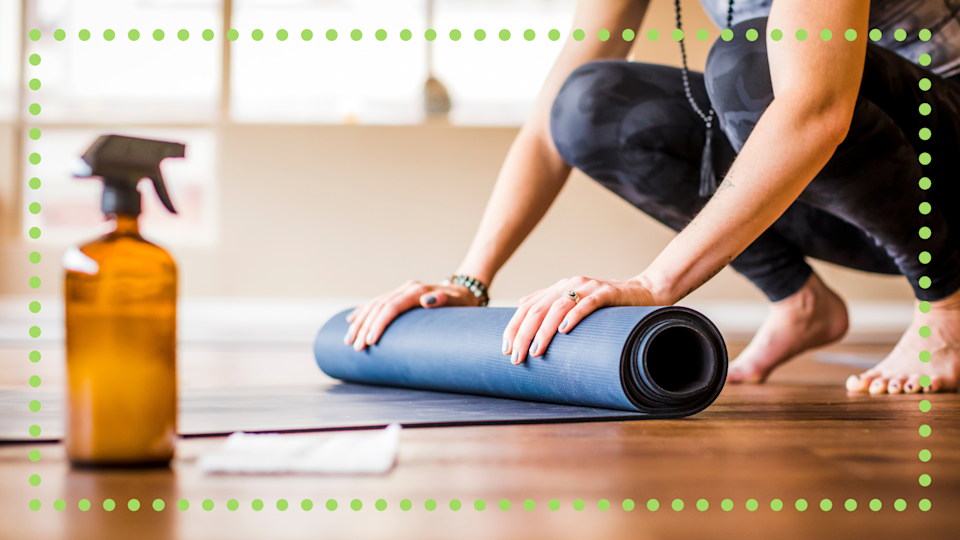
Mantiri recommends keeping a spray bottle right next to where you store your mat . After practice, simply spray the mat down and wipe it dry with a clean towel. Oftentimes, yoga studios also provide mat sprays that you can use.
When you wipe, be thorough. First, start by wiping down the floor where you’re cleaning the mat. Place the mat on the clean surface and spray your cleanser on the top. Wipe down every inch of the mat. Start at one corner and wipe side to side until you reach the opposite end. Flip the mat over and clean the other side.

How to deep clean your yoga mat
When it is time for that deep clean, check the label first. You should be doing this at least once a month, or sooner if the mat starts to look gross or smell funky. If there are no specific instructions, you can easily make your own cleaner. Mix one cup of white vinegar or witch hazel with four cups of water in a spray bottle. This usually does the trick. Alternatively, you can mix a little gentle soap with warm water. If you go the soap route, just make sure to wipe the mat down afterward with a plain, damp cloth to remove the residue. You don’t want a slippery mat during your next session.
Do you need to buy a yoga mat cleaner?
Companies often suggest using their own specific cleanser. But for most mats, a general natural cleaner works just fine. If you don’t want to mess around with mixing vinegar or witch hazel yourself, you can just buy a bottle. The Asutra yoga mat cleaning spray is a top pick on Amazon and comes in multiple scents.
If you have a rubber mat, check out Jade Yoga’s plant-based wash. It uses gentle ingredients to lift sweat and oil from the surface without compromising grip.
Prefer the convenience of a wipe? You can grab dedicated ones like the Tidy Mat Yoga Mat Cleaner wipes. If you want a cheaper option, the compostable, hypoallergenic Honest body wipes work great too.
How to dry and store a yoga mat
How you store your mat matters just as much as how you clean it. Once you wipe it down, dry off any excess moisture with a clean towel. Whatever you do, don’t just roll it up immediately.
Bacteria and fungi love damp, dark places. Houshmand says you need to let the mat dry completely before you put it away. This prevents mold and keeps your mat from rotting. If you are coming from a studio class, unroll your mat as soon as you get home to let it air out properly.
Also, never put your mat in the dryer or leave it out in the sun. Extreme heat causes the material to break down and crumble.
Sadly, even a clean mat won’t last forever. Mantiri says it may be time to replace your mat “when you notice the surface is peeling or flaking a lot, if it’s become slippery even after cleaning or if there’s a smell that won’t go away.” In that case, it is time to upgrade.
Check out the best yoga mats, tested and reviewed, including a top pick for hot yoga. You can also find recommendations for the best yoga blocks and best exercise balls.
Meet our experts
- Elizabeth Bahar Houshmand, MD, double board-certified dermatologist
- Jem Mantiri, RYT 500 yoga teacher
Our health content is for informational purposes only and is not intended as professional medical advice. Consult a medical professional on questions about your health.