Trump signs executive order to crack down on mail-in voting
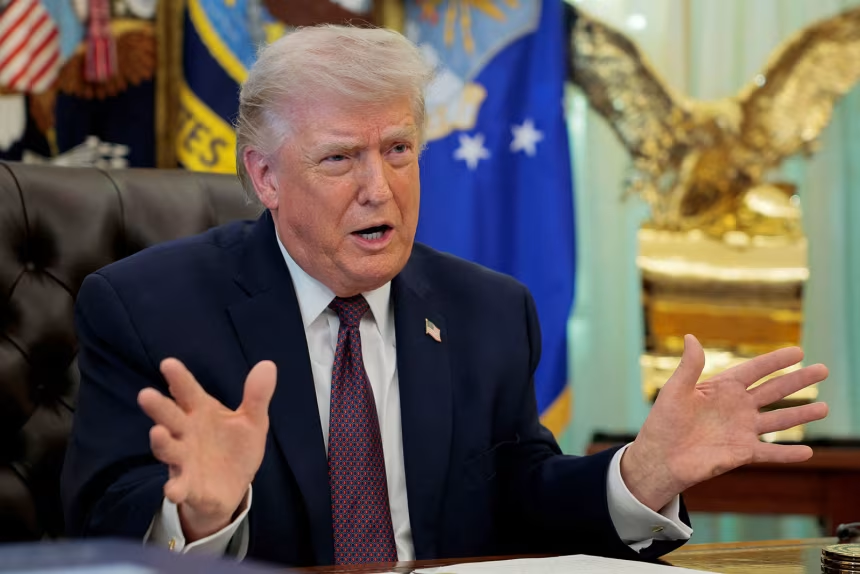
President Donald Trump signed an executive order Tuesday that seeks to task the federal government – through the US Postal Service – with determining who receives a mail ballot.
The executive order is Trump’s latest attempt to unilaterally shape how elections are run. It comes as legislation he’s championed requiring new citizenship verification measures to register to vote has floundered in the Senate, and as courts have pushed back on other aggressive attempts by the administration to inject itself in the voting process – a job the Constitution largely gives to the states.
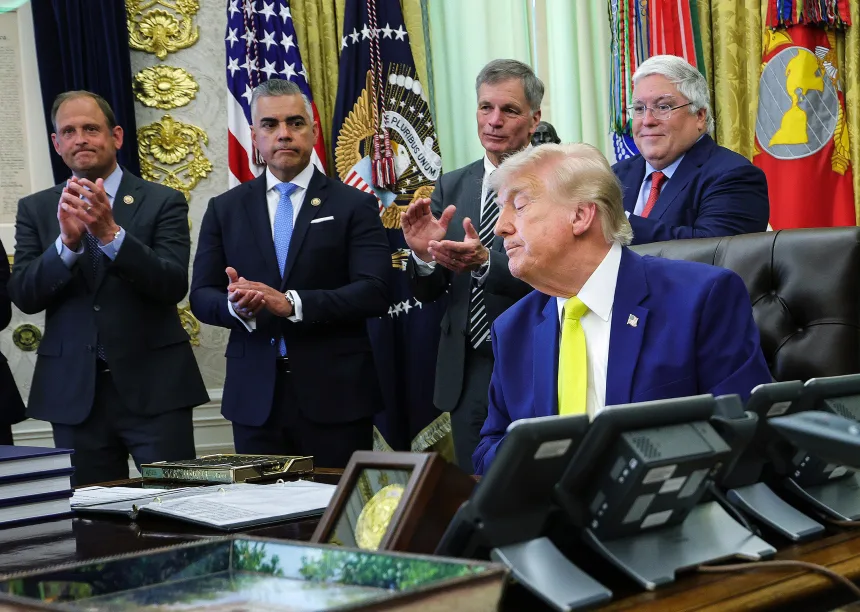
“It’s about voter integrity, we want to have honest voting in our country because if you don’t have honest voting, you can’t have really a nation,” Trump said after signing the order in the Oval Office.
Election experts told CNN the order is likely to be blocked in court, and that it would trample over the procedures set by states for absentee voting. Voter advocates and state election chiefs have already signaled they plan to sue over the directive.
The order directs the Department of Homeland Security, with the assistance of the Social Security Administration, to use various federal databases to assemble a list of adult citizens that states can then compare to their voter roles. The US Postal Service, in the meantime, is instructed only to transmit ballots for states that have provided the federal government a list of its eligible mail voters 60 days before the election and that have met several requirements for making their mail ballots compatible with USPS’ automated tracking service.
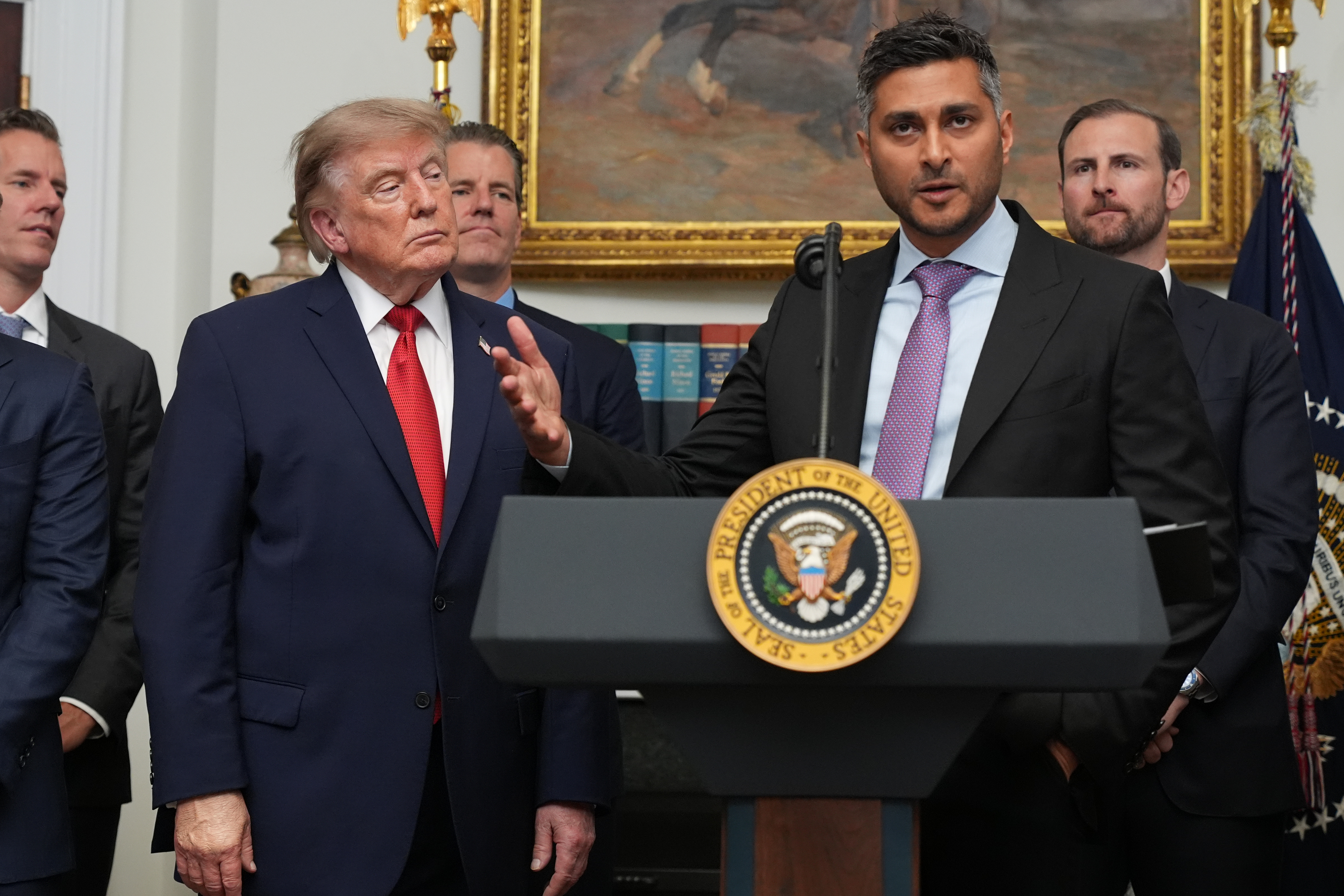
Commerce Secretary Howard Lutnick, who joined Trump at the order’s signing Tuesday, said states will be required to receive a bar code from the USPS that will be placed on mail-in ballot envelopes.
“The states run these elections – if they want to use the US mail, the US Postal Service, they’re going to get a code, a bar code, from the US Postal Service and they’re going to put that on the envelope and we will have one envelope per vote,” Lutnick said, standing behind Trump in the Oval Office.
The order purports to be invoking a constitutional authority for the “federal government” to “guarantee a republican form of Government to every State in the Union.”
But as federal courts that have struck down a previous Trump executive order seeking to implement new election rules have noted, the Constitution delegates that authority to Congress, not the president by himself.
Trump acknowledged the order could be legally challenged by a “rogue” federal judge, but he added, “I don’t see how anybody can challenge it.”
Tammy Patrick, the chief programs officer at the National Association of Election Officials, told CNN the order negates how each state individually decides to offer mail-in voting to its residents.
“At the highest level, it is taking the conduct of the election and the channel with which millions of Americans vote – voting absentee by mail – out of the hands of state and local officials, and into the hands of the federal government,” she said.
Threats of lawsuits
Trump has repeatedly and baselessly argued that US elections are rife with fraud. A previous executive order he issued about a year ago that sought to boost proof of citizenship requirements for voting was struck down by multiple courts. They concluded that the Constitution did not give the president authority to issue that provision or others in the 2025 election overhaul order on his own, and that he lacked any such authority under the laws passed by Congress that regulate some aspects of federal elections.
David Becker, a former Justice Department lawyer who now advises state and local election officials, said that this latest order will quickly meet the same fate.
“It is very clear that the president is trying to dictate policy to the states, and it’s also very clear that the United States Constitution prevents that,” Becker told CNN’s Jake Tapper. “His power is limited only to that which Congress has expressly authorized.”
Several of the Democratic state officials who successfully sued over Trump’s last executive order have already previewed plans to push back against this one.
“While Trump says mail ballots are illegitimate, he has voted by mail ballot for years. The Constitution is clear: states oversee elections, not Trump. We look forward to this unconstitutional overreach being stopped in court,” Colorado Secretary of State Jena Griswold said in a statement.
“President Trump can sign all the executive orders he wants. It won’t change the United States Constitution,” sad Kris Mayes, the Democratic attorney general of Arizona, where 80% of voters cast ballots by mail.
“We will use every legal tool available to defend Arizona’s elections, Arizona’s voters, and Arizona’s constitutional right to run its own elections,” she said.
Among the practical challenges the order would pose, if not blocked by courts, is how it would work for states that allow voters to apply for mail ballots up to a few weeks or just days before an election, Patrick said. It would also be impossible for smaller jurisdictions to make the changes it requires to make mail ballot envelopes compatible with USPS’ automated tracking service.
“If anyone believes in states’ rights and federalism, this is a real affront to the way in which our states and localities have gotten to where they are now, with how they serve their voters,” she said.